
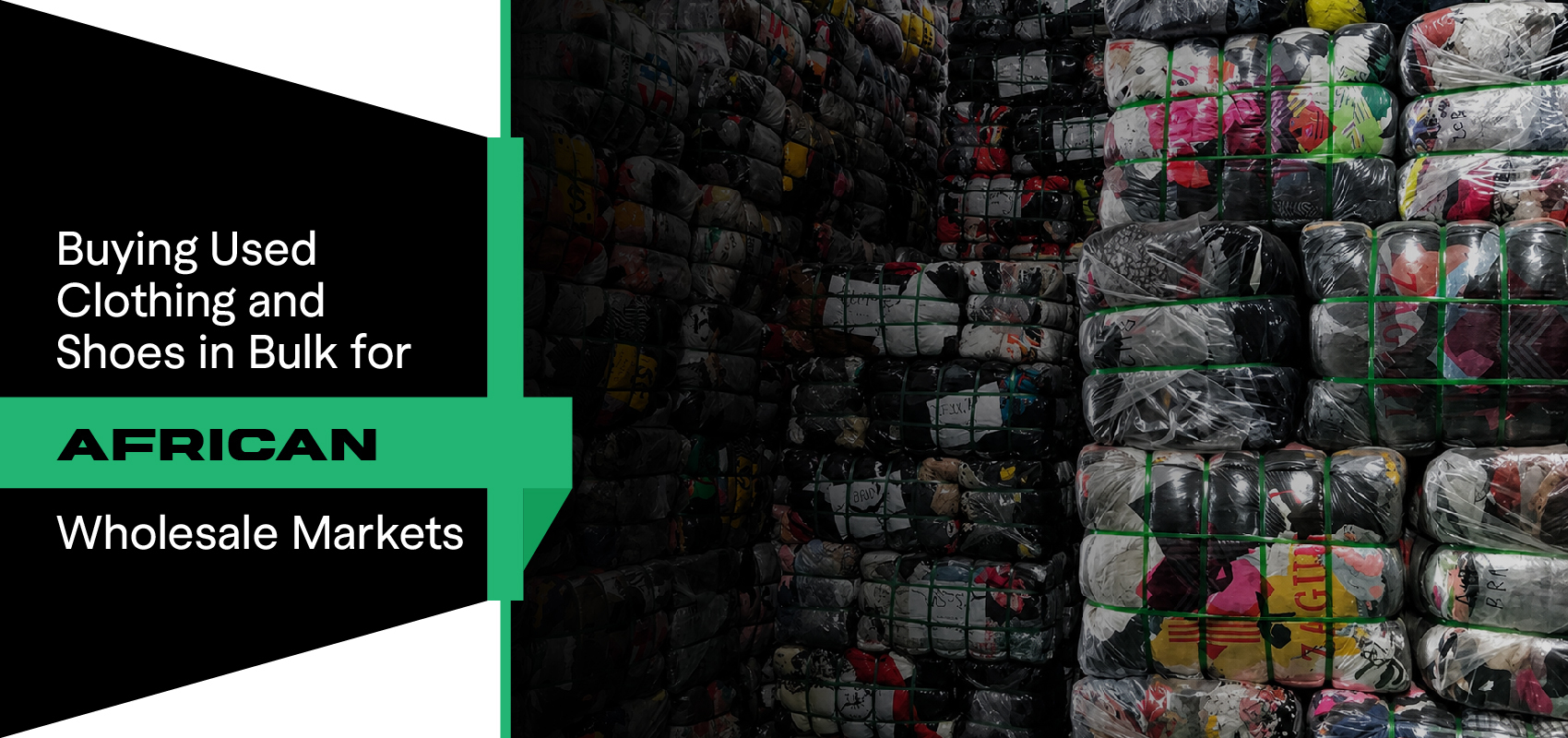
Africa represents one of the largest and most dynamic destinations in the global second-hand clothing and footwear trade. Across the continent—from major wholesale hubs in West and East Africa to Southern Africa—importers, regional distributors, and market traders source high volumes of pre-sorted textiles and footwear to supply active resale economies.
For African wholesale buyers, navigating international supply chains requires clear specifications: understanding quality grading, calculating total container landed costs, verifying pair-matching protocols for footwear, and managing customs compliance.
This guide provides a practical blueprint for sourcing Used Clothing and Shoes Wholesale Africa shipments efficiently while protecting profit margins and stock yield.
The Landscape of Second-Hand Clothing & Shoes Imports in Africa
The market for bulk used clothing Africa and footwear is diverse. Key commercial hubs across countries like Ghana, Kenya, Tanzania, Uganda, Nigeria, Senegal, and Mozambique serve as major regional distribution centers.
Regional Buying Dynamics
- West Africa (e.g., Ghana, Nigeria): High demand for tropical mix, lightweight
- cottons, high-grade footwear, and branded sportswear.
- East Africa (e.g., Kenya, Uganda, Tanzania): Strong market for sorted bales,
- children’s apparel, mixed shoes (Mitumba), and light transitional layers.
- Southern Africa (e.g., Mozambique): Varied demand covering both tropical mix
- and heavier seasonal items depending on regional climate shifts.
Successful importing requires working with an experienced used clothing exporter Africa relies on—one capable of tailoring bale compositions and grading rules to match your specific country’s market expectations.
Category Breakdown: Used Clothing Options
1. Mixed Used Clothing Bales
Unsorted mix bales contain a broad variety of garments (men’s, women’s, and children’s) packed together by weight.
- Best For: High-volume importers supplying open-air markets and regional resellers who handle local sorting.
- Advantage: Lowest cost per kilogram with high category volume.
2. Category-Sorted Used Clothing
Garments are sorted at the origin processing facility by specific type, gender, or age group (e.g., children’s wear, men’s dress shirts, women’s cotton dresses, or denim jeans).
- Best For: Importers supplying targeted retail stores, boutique networks, or established market vendors.
- Advantage: Higher resale yield per bale with minimal local sorting labor required.
Category Breakdown: Used Shoes Wholesale
Footwear is a high-margin product line for second-hand clothing Africa import businesses, but it requires strict quality controls at origin.
FOOTWEAR CATEGORIES
MIXED USED SHOES SORTED USED SHOES
Assorted athletic, casual, Segregated by type: Sports/Sneakers,
boots, and formal shoes. Children’s, Leather/Formal, Sandals.
Highest volume & cost efficiency. High resale value for specific target
Requires strict pair-matching. retail customer segments.
Critical Quality Protocol: Every footwear shipment must undergo 100% pair matching at the origin sorting facility. Unmatched or single shoes carry zero resale value and inflate freight costs unnecessarily.
Quality Grading Standards Explained
Understanding grade definitions prevents costly quality discrepancies upon container arrival:
| Quality Grade | Condition & Appearance | Ideal Target Market |
| Grade A (Cream / First Grade) | Minimal wear, zero stains or tears, bright colors, fully functional zippers/buttons. Ready for immediate display. | Premium retail boutiques, established urban stores, online sellers. |
| Grade B (Medium Grade) | Light cosmetic wear, minor wash fading, slight removable marks, or easily repairable faults. | General market vendors, secondary urban markets, regional distributors. |
| Grade C / Lower Mix | Visible wear, heavier staining, minor structural flaws requiring repair. | High-volume sorting yards, low-cost rural distribution channels. |
Calculating Total Landed Cost for Container Imports
To protect operating margins, used shoe wholesale Africa and clothing importers must calculate total landed costs before placing orders—not just the initial FOB (Free on Board) price.
LANDED COST FORMULA FOR CONTAINERS
Landed Cost = FOB Price + Ocean Freight + Import Duties + Port/Terminal Charges
Clearing Agent Fees + Inland Transportation
- FOB Price: The cost of sorted goods packed into bales/sacks at the port of origin.
- Ocean Freight: Shipping costs for 20ft (approx. 10–12 tons) or 40ft High Cube (approx. 24–26 tons) containers.
- Duties & Tariffs: Country-specific import taxes levied on second-hand textiles and footwear.
- Port Handling & Clearance: Local terminal handling charges, customs broker fees, and inspection costs.
- Inland Logistics: Transporting the container from the destination port to your central warehouse.
Essential Import Verification & Documentation Checklist
Before committing to container-scale orders, complete these verification steps:
- [ ] Written Grading Specs: Obtain exact, written definitions of what your supplier includes in Grade A vs. Grade B streams.
- [ ] Pair-Matching Guarantee: Confirm in writing that all footwear is paired and checked for sizing accuracy before baling.
- [ ] Pre-Shipment Visual Inspection: Request live video walkthroughs or detailed photo logs of bales being packed and loaded into the container.
- [ ] Fumigation Certification: Ensure the origin facility completes certified chemical/heat fumigation and provides an official certificate (mandatory for African customs clearance).
- [ ] Destination Documentation Package: Confirm that your supplier provides:
- Commercial Invoice (with accurate HS codes and declared values)
- Packing List (detailing exact bale counts and weights)
- Bill of Lading (B/L)
- Certificate of Origin
- Fumigation Certificate
Frequently Asked Questions
What products are included in a mixed used clothing and shoes container for Africa?
A mixed container usually includes a combination of compressed clothing bales (men’s, women’s, and children’s apparel) and footwear sacks (sports shoes, casual sneakers, sandals, and formal styles). Each category is packed separately and declared cleanly on the packing list.
What quality grade is recommended for first-time African importers?
Grade A (Cream Grade) is recommended for importers serving established urban retail markets that demand immediate resale quality. Grade B is suitable for buyers serving budget-conscious outdoor markets where local sorting can handle minor touch-ups.
How is footwear pair matching verified in bulk shipments?
Professional exporters perform a two-stage manual check: first sorting individual shoes into pairs by brand, model, and size, and then tying or bagging pairs together before packing them into sacks or bales.
What documentation is required to clear second-hand garments at African ports?
Standard required documentation includes the Commercial Invoice, Packing List, Bill of Lading, Certificate of Origin, and a valid Fumigation Certificate. Always verify specific local customs regulations with a destination broker before shipping.
Can clothing bales and shoe sacks be shipped in the same container?
Yes. Many bulk buyers combine clothing bales and footwear sacks in a single 20ft or 40ft container to optimize space and diversify inventory while keeping total freight costs efficient.
Final Thoughts
Importing used clothing and footwear at container scale requires operational clarity. By specifying accurate quality grades, enforcing strict shoe pair-matching standards, and calculating comprehensive landed costs before shipping, African wholesale buyers can build steady, profitable resale operations.
Partnering with an open, experienced export supplier ensures consistent bale quality, smooth customs clearance, and sustainable business growth across every shipping cycle.