
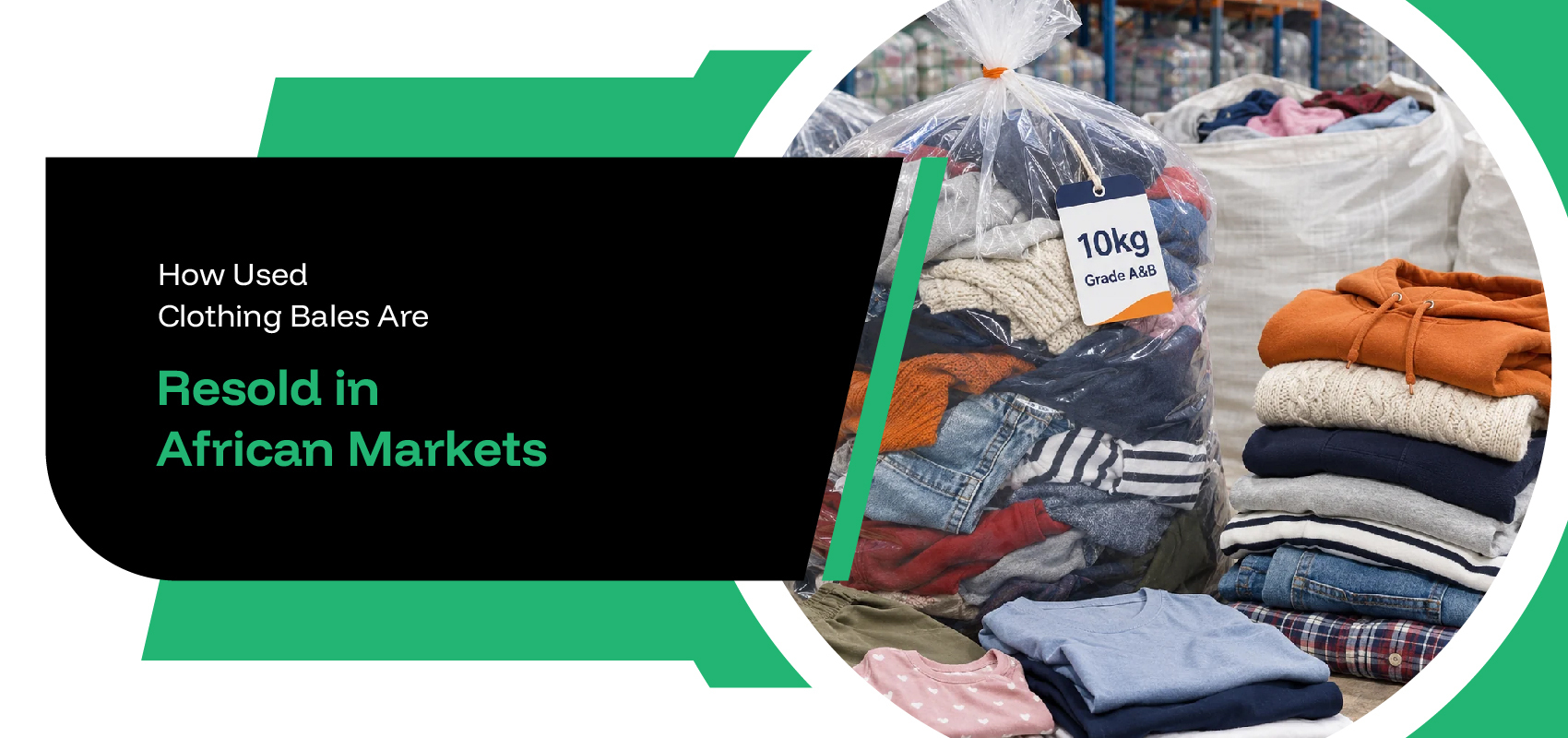
When a container of used clothing reaches an African port, its journey is only half finished. The bales still have to pass through wholesalers, bale openers and market traders before a single garment reaches a shopper.
Understanding that chain helps importers choose better used clothing bales for Africa, price them sensibly, and build the kind of reputation that brings wholesale customers back. This guide follows a bale from port to market stall, using East African market practice as a practical example.
One Trade, Many Names
Second-hand clothing is part of everyday shopping across much of Africa, and it has local names in different regions.
In East Africa, including Kenya and Tanzania, it’s widely called mitumba. In Ghana it’s known as obroni wawu. In French-speaking West Africa you’ll often hear friperie.
In Nigeria it’s called okrika, but second-hand clothing is on Nigeria’s import prohibition list, so importers should not ship it there.
The scale is significant. Kenya alone imports more than KSh 20 billion of second-hand clothes a year, according to Kenya National Bureau of Statistics figures reported in 2025.
The Journey From Container to Market Stall
1. The Importer
The importer buys bales from an overseas exporter, clears them through customs and moves them to storage. Most importers buy at container level, as we explain in our container buying guide for used clothing importers in Africa.
2. The Wholesaler
Wholesalers, who are often the importers themselves, sell whole bales to traders. A trader buying a sealed bale is taking a risk, because they can’t see exactly what’s inside until it’s opened.
3. Bale Opening
This is where a bale’s value is decided. In large markets such as Gikomba in Nairobi, bales are opened early in the morning and buyers pick in a set order.
The first pick is often called a “camera”. These are the best pieces, sold at the highest prices. The next buyers, sometimes called “set”, pick from what remains. At the end of the day, leftover pieces are sold off very cheaply, a practice known locally as “fagilia”.
4. Retail Traders and Shoppers
Traders then resell pieces from stalls, roadside displays and shops, and increasingly through social media and live-stream selling. Each step adds a margin, so the quality of the original bale affects everyone in the chain.
Why Bale Quality Decides Value All the Way Down the Chain
The first pick is where traders make most of their money. A bale with a high share of good first-pick pieces is profitable. A bale that is mostly leftovers loses money, even if it was cheap.
Traders remember which bales open well. Over time, wholesalers whose bales consistently perform become the ones traders seek out, and their stock sells faster and at better prices.
Kenyan market reporting has also noted that traders feel bale prices don’t always reflect quality, and that feedback between exporters, importers and wholesalers is weak. That’s an opportunity. Importers who give their exporter specific feedback, and receive more consistent stock in return, stand out in a crowded market.
What This Means When You Order From an Exporter
Order the categories your market picks first: Children’s clothing, ladies’ tops, denim and shoes are commonly cited as strong categories in African markets, but demand varies by country and city. Base your order on what sells in your own market, not on a general list.
Specify the grade clearly: A higher grade means more first-pick pieces per bale. Ask the exporter to explain what each grade contains in practice.
Consider category bales: Bales sorted by category, such as jeans only or children’s only, let wholesalers sell to traders who specialise, which can make them easier to move.
Ask for consistency: One great container followed by a weak one damages your reputation with traders. Consistency matters as much as quality.
Check shoe pairs: For footwear, matched pairs are essential. Our guide to how used shoes are graded for African wholesale markets explains what to look for.
RK Exports supplies used clothing and shoes to wholesale buyers in African markets, and can discuss grade, category and composition before an order is confirmed.
Check the Rules Before You Ship
Import rules for used clothing vary widely across Africa. Some countries allow it with standard duties, some apply higher charges or extra requirements, and some prohibit it, as Nigeria does.
Rules can also change, so confirm the current position with a licensed clearing agent in your country before placing an order. Our guide to quality standards for used clothing and shoes imported into Africa covers related requirements.
FAQs
What is mitumba?
Mitumba is the Swahili term widely used in East Africa, including Kenya and Tanzania, for second-hand clothing and shoes. It usually arrives in compressed bales from overseas exporters, is sold by wholesalers to traders, and is then resold in markets, stalls and shops. Similar trades go by other names elsewhere in Africa.
What does “camera” mean in the mitumba trade?
In Kenyan markets such as Gikomba, “camera” is the first pick from a newly opened bale. These are the best pieces and sell at the highest prices. Later buyers pick from what remains, and leftovers are eventually sold off cheaply. The share of first-pick pieces largely decides a bale’s value.
Why do some used clothing bales sell better than others?
Bales sell better when they contain a high share of clean, wearable, in-demand pieces. Grade, category mix and consistency all matter. Traders quickly learn which wholesalers’ bales open well and return to them, so consistent quality builds a reputation that supports better prices over time.
Can I import used clothing into Nigeria?
Second-hand clothing appears on Nigeria’s import prohibition list, so commercial imports should not be shipped there. Rules in other African countries differ, and some restrict or tax used clothing heavily. Always confirm current requirements with a licensed clearing agent before placing an order.
Which used clothing categories sell best in African markets?
It depends on the country and city. Children’s clothing, ladies’ tops, denim and shoes are often mentioned as strong categories, but local demand varies. Speak to traders in your market, track what sells from early shipments, and adjust your category mix with your exporter accordingly.
Conclusion
Used clothing bales in Africa pass through several hands before they reach a shopper, and the bale’s quality affects every step. Bale opening, first pick and leftover pricing all trace back to what the importer ordered. Importers who choose categories their market wants, specify grades clearly, insist on consistency and give their exporter honest feedback build the reputation that keeps traders coming back.