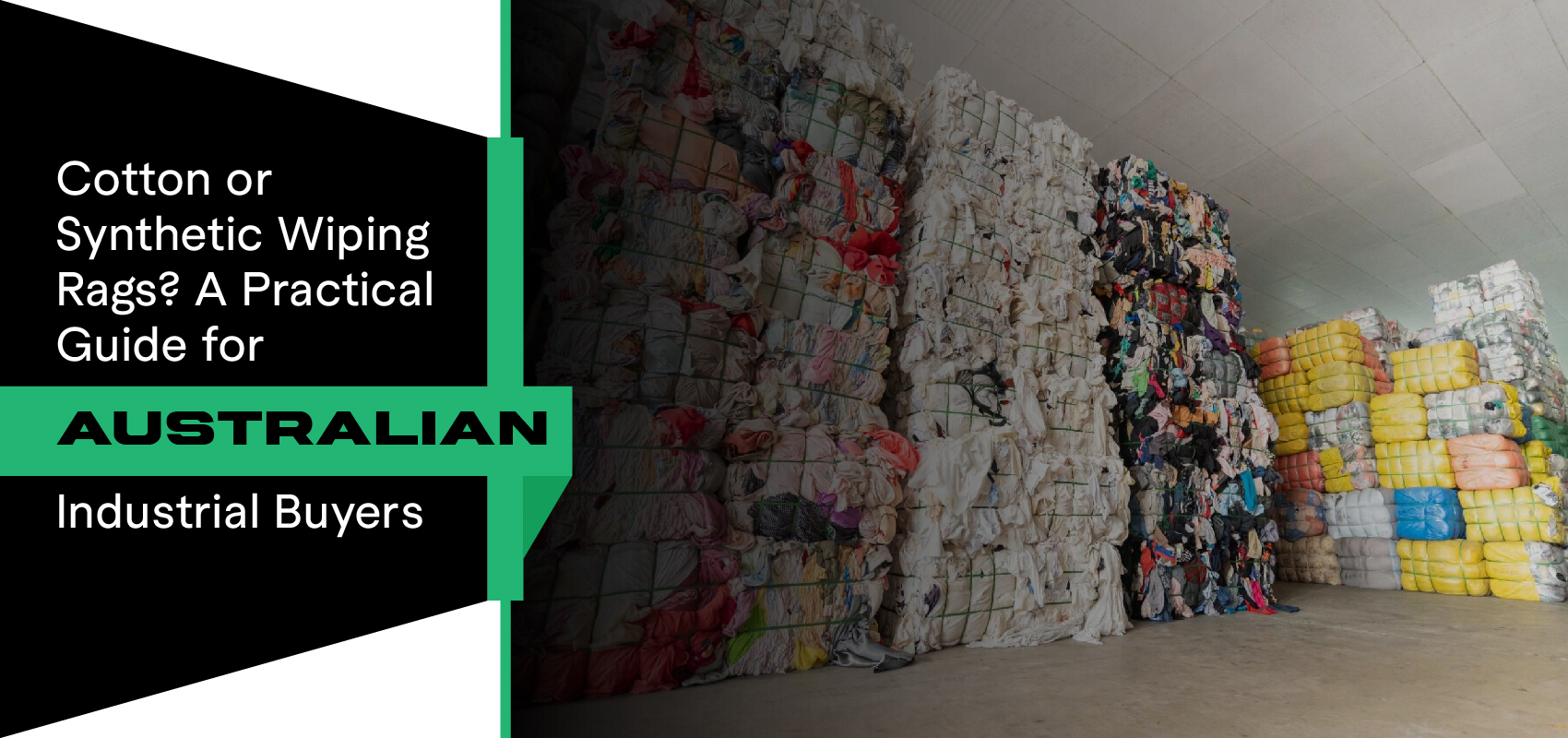
When Australian workshops, factories, and maintenance operations order industrial wiping rags in bulk, one of the most common questions buyers face is whether to go with cotton or synthetic. It sounds like a minor detail, but the material choice has real practical consequences — how well the rags absorb, how they interact with the surfaces and substances being cleaned, how they hold up under heavy use, and how much they cost per unit over time. Getting this decision right saves money and reduces frustration. Getting it wrong means reordering sooner than expected or ending up with rags that don’t perform the way the job requires.
This guide breaks down what each material does well, where each one falls short, and how to match the right rags to the specific demands of your workplace.
What Cotton Wiping Rags Are and Why They’re Widely Used
Cotton wiping rags are made from natural cotton fibres, typically sourced from recycled and reclaimed textile materials — worn clothing, cut fabric, and textile offcuts that have been cleaned, sorted, and cut for industrial use. The recycled origin is why they’re often referred to as “reclaimed cotton rags” in the industrial supply trade.
Cotton absorbs liquids exceptionally well: This is the defining characteristic that makes cotton the preferred choice for most liquid-based cleaning tasks in industrial environments. Cotton fibres are naturally hydrophilic — they draw moisture toward the fibre and hold it until the rag is wrung out or replaced. For oil absorption, coolant cleanup, solvent wiping, and general moisture removal, cotton performs consistently better than most synthetic alternatives.
Cotton is soft on surfaces: In environments where the surface being cleaned is sensitive — polished metal, painted panels, glass, precision components — cotton’s natural softness reduces the risk of scratching or abrasion. This makes it the preferred choice in automotive finishing, aerospace work, and precision engineering applications.
Cotton breathes and releases absorbed material cleanly: When you’re wiping down a surface with a solvent or cleaner applied to a cotton rag, the material releases the liquid smoothly and wipes without leaving residue. Synthetic materials can sometimes smear rather than absorb, particularly with oils and greases.
The varieties of cotton rags available for Australian industrial buyers include white cotton wipers, which are the cleanest and most controlled option (consistent material, low lint, suitable for precision cleaning), coloured cotton rags, which are sorted from coloured garment material and are practical for general-purpose maintenance and cleaning tasks, and fleece rags, which are thicker and heavier and suit applications that require more material per wipe or need the extra thickness for grip or insulation.
What Synthetic Wiping Rags Are and Where They Work
Synthetic wiping rags are made from synthetic fibres — polyester, nylon, polypropylene, or blended synthetic materials — either from new materials or reclaimed synthetic textiles. Their physical properties are quite different from cotton, and those differences define the specific applications where they perform best.
Synthetic rags are more resistant to tearing and fraying: Under physical stress — heavy scrubbing, abrasive surfaces, rough handling — synthetic fibres generally hold together better than natural cotton. For tasks that involve significant friction rather than liquid absorption, this durability is a practical advantage.
Synthetic materials can be more resistant to certain chemicals: Some synthetic fibres tolerate specific industrial chemicals better than cotton, particularly in applications involving acids, alkalis, or other aggressive cleaning agents that can degrade natural fibres quickly.
Synthetics are typically low-lint: In environments where lint contamination is a concern — electronics manufacturing, clean rooms, precision coating work — synthetic materials can be preferable to cotton, which releases fibres more readily.
However, synthetic wiping rags have a significant limitation that determines whether they’re appropriate for most Australian industrial applications: they absorb liquids far less effectively than cotton. Synthetic fibres are naturally hydrophobic — they repel moisture rather than drawing it in. This means that for oil absorption, coolant cleanup, solvent handling, and most liquid-based maintenance tasks, synthetic rags underperform compared to cotton at the same task.
Comparing Cotton and Synthetic Rags Across Common Australian Industrial Applications
Automotive workshops: Cotton is the dominant choice. Oil changes, coolant flushes, brake fluid handling, power steering fluid, and panel wiping all involve liquids that cotton absorbs effectively. White cotton wipers are preferred for precision work around painted panels and interiors where surface sensitivity matters. Coloured cotton rags handle heavier-duty cleaning under engines and in wheel wells.
Manufacturing and machining: Cotton is preferred for most metalworking fluid, coolant, and cutting oil cleanup. The high liquid absorption and surface-safe properties make it practical for keeping machines and work surfaces clean without damaging precision components. For very abrasive cleaning tasks — removing baked-on residue or heavy contamination — synthetic or blended rags may be specified for their durability.
Mining and resources sector: Both materials have applications in mining environments. Cotton handles equipment fluid cleanup and maintenance wiping effectively. Synthetic materials are sometimes specified for applications where chemical resistance matters or where rag durability under extreme physical conditions is a priority.
Cleaning and janitorial operations: Cotton rags perform well for most surface cleaning and maintenance tasks in commercial cleaning contexts. White cotton wipers specifically suit work where colour contamination from the rag material itself would be a problem — food service environments, healthcare facilities, and clean manufacturing areas.
Automotive and vehicle spray painting: This is an area where cotton quality grade becomes critical. White cotton wipers with low lint output are preferred for surface preparation and tack wiping ahead of paint application. Any lint left on a surface before painting appears in the finished coat. The lower lint output of quality white cotton wipers makes them the reliable choice here.
The Case for White, Coloured, and Fleece Cotton Wipers Specifically
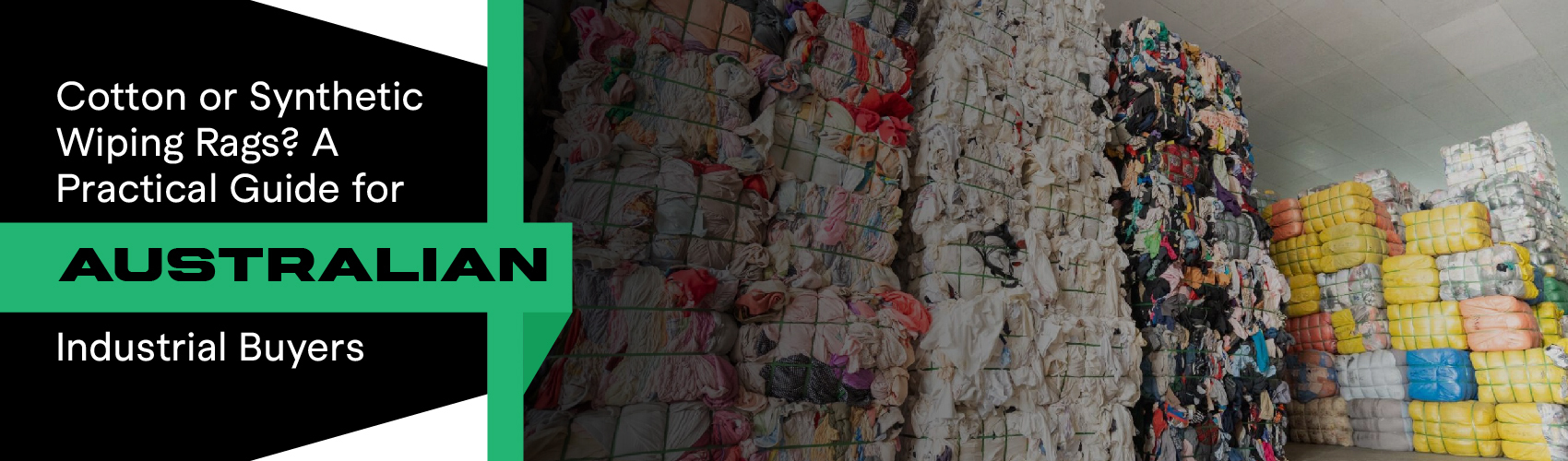
Within the broader cotton wiping rag category, the specific type of cotton rag makes a practical difference. RK Exports supplies industrial wiping rags to Australian buyers across three main cotton categories:
White cotton wipers are the cleanest and most controlled option. Sourced from white or light-coloured cotton garment material, they offer consistent absorbency, lower lint output, and no colour transfer risk. They’re the right choice for any application where precision matters — automotive finishing, electronics, medical device manufacture, and similar environments.
Coloured cotton rags are sorted from coloured garment material and provide the same strong cotton absorbency for general maintenance, cleaning, and shop floor use where colour transfer isn’t a concern. For most routine industrial cleaning tasks, coloured cotton rags perform equivalently to white wipers at a more practical price point.
Fleece wiping rags are thicker and heavier than standard cotton garment rags. The additional bulk provides more absorbent material per piece and more physical coverage per wipe, making them suitable for larger-area cleanup tasks, heavy spill management, and applications where buyers want more material weight per unit.
Key Buying Considerations for Australian Industrial Buyers
Understand what you’re primarily cleaning up. Liquids — oils, coolants, solvents, water — favour cotton strongly. Abrasive or dry cleaning tasks may be less material-dependent.
Consider the surfaces being cleaned. Sensitive surfaces (painted, polished, precision-machined) benefit from the softness and surface safety of good-quality cotton. Rough industrial surfaces have less specific material requirements.
Factor in lint sensitivity. If lint in or around the work is a problem, specify white cotton wipers with known low lint output rather than general mixed cotton rags.
Buy in appropriate volume. Industrial wiping rags are a consumable. Buying in bulk at container scale from a direct exporter like RK Exports produces significantly better unit economics than buying in small packs from a domestic distributor. The per-unit cost advantage at container volume is meaningful across an annual consumption budget.
Request pre-shipment information. When ordering from an international exporter, ask for product specification details — material composition, weight per piece or per kilogram, colour category — before confirming the order. This ensures what arrives matches the application requirements.
FAQs
Are cotton wiping rags better than synthetic for Australian workshops?
For most Australian industrial applications — automotive, manufacturing, mining maintenance, general workshop cleaning — cotton wiping rags perform better than synthetic for liquid absorption, which is the primary function of an industrial rag. Cotton’s natural moisture absorption, surface softness, and clean wiping characteristics make it the standard choice for oil, coolant, solvent, and water-based cleanup tasks. Synthetic rags suit specific applications where chemical resistance or physical durability under abrasion is the priority over liquid absorption.
What is the difference between white and coloured cotton wiping rags?
White cotton wipers are sourced from white or light-coloured cotton garment material, producing a more consistent and predictable product with lower lint output and no risk of colour transfer to surfaces. Coloured cotton rags are sorted from coloured garment material and provide equivalent absorbency for general industrial cleaning tasks where colour transfer is not a concern. White wipers are recommended for precision, surface-sensitive, or contamination-controlled applications. Coloured rags are practical for general maintenance and routine shop floor use.
What are fleece wiping rags used for in Australian industry?
Fleece wiping rags are thicker and heavier than standard cotton garment rags, providing more absorbent material per piece. They suit applications involving larger-area cleanup, heavy spill management, or situations where buyers prefer more physical material per unit for coverage or grip. They are used across manufacturing, automotive, and maintenance sectors where standard cotton rag weight is insufficient for the task volume.
How much do industrial wiping rags cost when imported in bulk to Australia?
Bulk imported cotton wiping rags from Pakistan are typically priced per kilogram, with the total landed cost including freight and import duties depending on container volume and product grade. Buying at container scale (20ft or 40ft) from a direct exporter produces significantly better unit economics than purchasing through Australian domestic distributors, which add their own margin on top of the import price. Contact RK Exports directly to discuss current pricing and container options.
Is there a minimum order quantity for industrial wiping rags shipped to Australia?
RK Exports supplies industrial wiping rags to Australian buyers at container level — 20ft or 40ft depending on volume requirements. Buyers who are new to direct importing are encouraged to get in touch to discuss order sizing, lead times, and how the container import process works in practice for Australian buyers.
Conclusion
Choosing between cotton and synthetic industrial wiping rags for Australian workshops and factories is straightforward once you understand what each material is actually good at. For the majority of industrial cleaning and maintenance tasks — liquid absorption, surface wiping, coolant and oil cleanup — cotton performs more effectively and remains the industry standard for good reason. The specific grade of cotton rag (white, coloured, or fleece) then determines which applications it suits best. Buyers who match material to task, buy in appropriate bulk volume, and source from reliable export suppliers build a consumable procurement process that supports their operation without creating unnecessary cost or supply chain disruption.