

Introduction
Choosing the right industrial wiping rag is not simply a matter of purchasing cleaning materials in bulk. Different industries require different levels of absorbency, durability, and fabric quality depending on their daily operations. For Australian manufacturers, workshops, maintenance providers, and industrial facilities, understanding the grades of industrial wiping rags can improve cleaning efficiency and reduce unnecessary costs. This guide explains the most common wiping rag grades, their practical applications, and what buyers should consider when sourcing bulk industrial wiping rags for Australian operations.
What Are Industrial Wiping Rag Grades?
Industrial wiping rag grades are the classification of wiping materials by fabric type, colour, absorbency, cleanliness, and intended application.
Suppliers typically categorize wiping rags to help buyers choose products that match their operational requirements. Different grades are suitable for different industries, from precision manufacturing environments to heavy industrial maintenance facilities.
Understanding these distinctions helps businesses purchase the most appropriate wiping materials rather than paying for unnecessary specifications.
Why Industrial Wiping Rag Grades Matter
Industrial cleaning requirements vary significantly between industries.
For example:
- Automotive workshops often require highly absorbent rags for oil and grease removal.
- Manufacturing facilities may need lint-free materials for machinery maintenance.
- Engineering workshops often use durable wiping cloths for repetitive cleaning tasks.
- Painting and finishing operations may require cleaner grades to avoid contamination.
Selecting the correct grade improves cleaning performance and reduces material waste.
White Wiping Rags
White wiping rags are generally considered one of the most versatile industrial wiping materials.
Common Characteristics
- High absorbency
- Cleaner appearance
- Easy contamination visibility
- Suitable for sensitive cleaning applications
Typical Uses
- Manufacturing facilities
- Engineering workshops
- Equipment maintenance
- Surface preparation work
Many Australian businesses prefer white wiping rags when cleanliness and quality control are important factors.
Coloured Wiping Rags
Coloured wiping rags are widely used for general industrial cleaning tasks.
Common Characteristics
- Cost-effective option
- Durable fabric composition
- Suitable for heavy-duty cleaning
- Ideal for high-volume usage
Typical Uses
- Machinery cleaning
- Workshop maintenance
- Oil and grease removal
- Industrial housekeeping
For operations requiring large quantities of wiping materials, coloured wiping rags often provide an economical solution without sacrificing functionality.
Fleece Wiping Rags
Fleece wiping rags offer a different set of advantages compared to traditional cotton materials.
Common Characteristics
- Soft texture
- Good absorbency
- Effective dust collection
- Suitable for polishing applications
Typical Uses
- Surface cleaning
- Equipment polishing
- Dust removal
- Finishing processes
Fleece materials are commonly selected when a softer wiping solution is required.
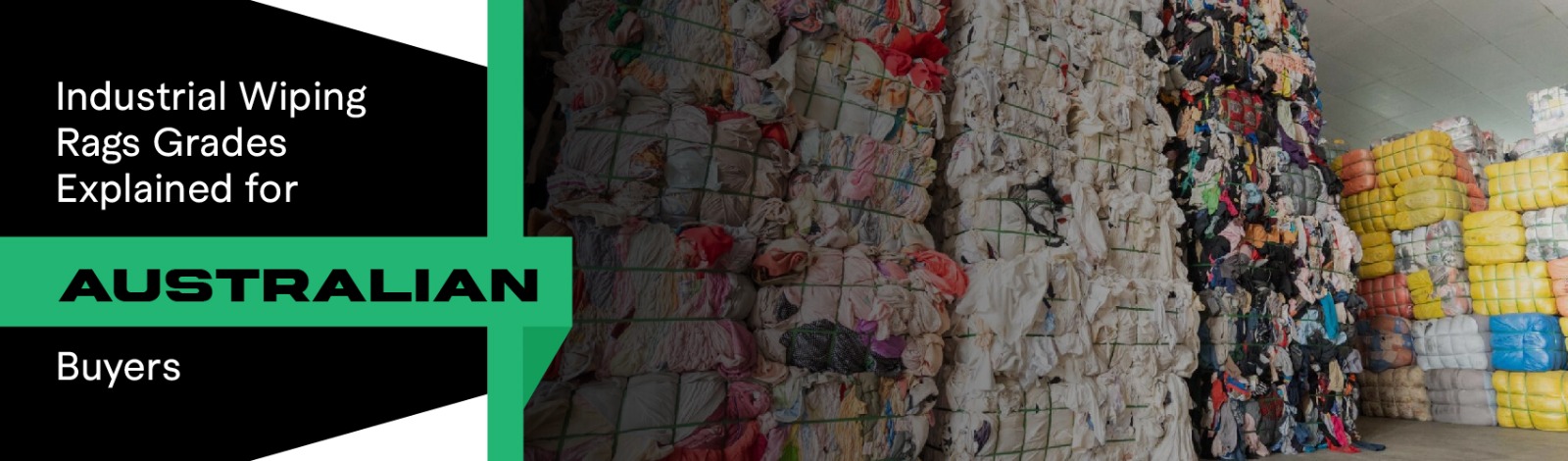
How Australian Buyers Select Industrial Wiping Rags
Australian buyers typically evaluate several factors before purchasing bulk wiping rags.
Absorbency Requirements
Industries that handle oils, lubricants, or other liquids generally prioritize absorbent materials.
Fabric Strength
Durability becomes important when rags are used repeatedly in demanding environments.
Application Type
Different tasks require different wiping materials. Precision cleaning often requires cleaner grades, while heavy-duty maintenance may prioritize durability.
Cost Efficiency
Many businesses seek a balance between performance and cost when sourcing industrial wiping rags in bulk.
Common Mistakes When Purchasing Bulk Wiping Rags
Some buyers focus exclusively on price and overlook operational requirements.
Common mistakes include:
- Choosing the wrong fabric type
- Ignoring absorbency requirements
- Purchasing unsuitable grades for specific applications
- Failing to evaluate long-term usage costs
Understanding grade differences helps avoid these issues and improves purchasing decisions.
Industrial Wiping Rags in Australian Manufacturing
Industrial wiping rags play an important role across Australian manufacturing, engineering, maintenance, and industrial service sectors.
For businesses looking to understand how wiping materials are used across production environments, readers can also explore industrial wiping rags in manufacturing operations.
Companies seeking a reliable supplier of industrial wiping rags in Australia should also evaluate product consistency, bulk supply capabilities, and industry-specific requirements before selecting a supplier.
Frequently Asked Questions
What are the main types of industrial wiping rags?
The most common types include white, coloured, and fleece wiping rags. Each serves different industrial cleaning and maintenance purposes.
Which wiping rag is best for removing oil and grease?
Both white and coloured cotton wiping rags are commonly used for oil and grease removal because of their absorbent properties.
Why do industries use bulk wiping rags?
Bulk-wiping rags provide a cost-effective cleaning solution for manufacturing, maintenance, engineering, and industrial operations that require regular cleaning.
Are fleece wiping rags suitable for industrial use?
Yes. Fleece wiping rags are commonly used for polishing, dust removal, and applications where a softer wiping material is preferred.
How do buyers choose the right grade of wiping rag?
Buyers typically evaluate absorbency, durability, fabric type, application requirements, and overall cost efficiency before selecting a grade.