
Introduction
Used clothing is sorted for export through a structured process that determines quality, resale value, and buyer satisfaction. For wholesale buyers targeting Thailand, understanding how used clothing is sorted for export helps prevent grading disputes, inconsistent bales, and financial loss. The sorting stage is where product value is created or destroyed. Export-ready suppliers follow defined screening, grading, and packing procedures to ensure shipments meet market expectations in Thailand and other Southeast Asian destinations.
For buyers working with a professional used clothing exporter, understanding how garments are sorted before shipment is essential for protecting resale margins.
Why Sorting Is the Most Important Step in Used Clothing Export
Sorting directly impacts:
- Resale margins
- Customer satisfaction
- Bale consistency
- Rejection rates
Poor sorting leads to mixed-quality loads, damaged garments, and high wastage percentages. Professional exporters treat sorting as a controlled industrial process rather than a manual resale activity.
Buyers who understand the operational standards of a used clothing exporter for wholesale buyers in Thailand are better positioned to evaluate supplier reliability before committing to bulk orders.
How Used Clothing Is Sorted for Export
1. Initial Screening and Removal
After collection from donation streams and recycling facilities, garments go through initial screening. At this stage, workers remove:
- Torn or heavily stained items
- Wet or mold-damaged pieces
- Unsuitable fast-fashion items
- Non-clothing textiles
This step ensures that only resellable material enters the grading process.
2. Category Separation
Clothing is separated by type:
- Men’s, women’s, and children’s wear
- Summer and winter garments
- Denim, jackets, shirts, dresses
- Branded vs non-branded items
Thailand’s climate and resale structure require careful seasonal sorting. Sending heavy winter stock to a tropical resale market creates avoidable losses.
3. Grading by Condition
This is the core of how used clothing is sorted for export.
Typical grades include:
- Cream (premium resale quality)
- Grade A (good condition, minimal wear)
- Grade B (visible wear but reusable)
- Mixed commercial
Each grade serves different buyer segments. Clear grade definitions reduce disputes after arrival in Thailand.
4. Final Inspection Before Packing
Before baling, items undergo a final visual check to confirm:
- No major damage
- Correct category placement
- Consistent quality within grade
Experienced exporters maintain supervision at this stage to prevent quality drift.
Bale Preparation and Export Packing
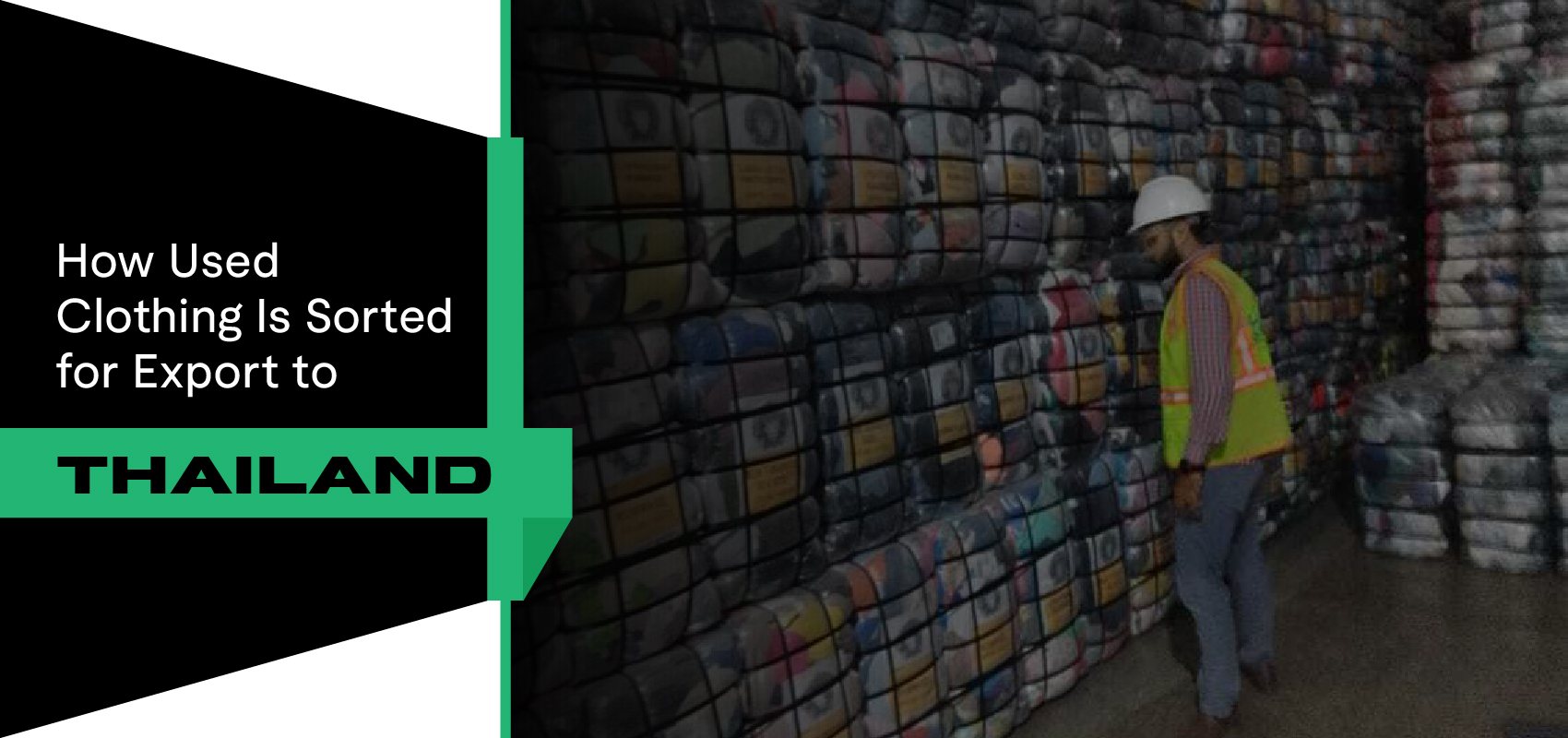
After grading, garments are compressed into export bales. Standard practices include:
- Weight-based baling (45kg–100kg)
- Proper labeling
- Moisture control
- Secure wrapping for sea freight
Inconsistent bale composition is one of the most common complaints from Thai wholesale buyers. Structured packing prevents this issue.
Common Sorting Problems Buyers Should Know
Buyers importing into Thailand often face:
- Mixed-grade contamination
- Incorrect seasonal loads
- Excess unusable items
- Overcompressed bales damaging garments
These problems usually indicate weak sorting supervision at origin.
Why Thailand Buyers Must Understand Sorting Standards
Thailand serves both as a consumer market and redistribution hub. Importers must align grading with:
- Local resale demand
- Regional redistribution needs
- Climate suitability
- Target price points
Understanding how used clothing is sorted for export helps buyers evaluate suppliers before committing to container-scale orders.
FAQs
What is the most important factor in used clothing sorting?
Condition grading is the most critical factor. Clear grading standards ensure predictable resale value and reduce post-shipment disputes.
How are cream-grade clothes different from Grade A?
Cream-grade garments are near-new with minimal wear, often suitable for boutique resale. Grade A items show light use but remain in good wearable condition.
Are used clothing bales sorted by season?
Yes. Professional exporters separate summer and winter garments to match destination climate requirements, especially for tropical markets like Thailand.
Can buyers request custom sorting categories?
Experienced exporters allow category-based sorting based on buyer needs, including denim-only, branded mixes, or children’s wear lots.
Conclusion
Understanding how used clothing is sorted for export gives wholesale buyers greater control over quality, pricing, and resale success. For businesses targeting Thailand, structured grading, seasonal separation, and consistent bale preparation are essential. Working with exporters who follow disciplined sorting procedures reduces risk and builds long-term trade stability in the used clothing market.