
Introduction
The used clothing export process involves structured sorting, grading, documentation, packing, and container shipment. For businesses importing into Thailand, understanding the used clothing export process reduces risk, improves customs clearance efficiency, and ensures consistent resale quality. Buyers working with a professional used clothing exporter should understand each operational stage before committing to bulk orders.
Overview of the Used Clothing Export Process
A structured export process typically includes:
- Collection and pre-sorting
- Quality grading
- Bale preparation
- Documentation
- Container loading
- Shipping and customs clearance
Each stage directly affects shipment reliability.
Sorting and Initial Screening
Before export begins, garments pass through professional sorting systems. As explained in our guide on how used clothing is sorted for export to Thailand, unusable items are removed and garments are separated by category and condition.
Proper screening prevents shipment rejection and resale losses.
Grading and Quality Control
After sorting, clothing is graded according to condition standards. Clear grading definitions reduce disputes and maintain consistency. Buyers should review grading frameworks similar to those discussed in the used clothing grading system explained for Thailand buyers.
Quality control supervisors typically conduct final inspections before packing.
Bale Preparation and Packing
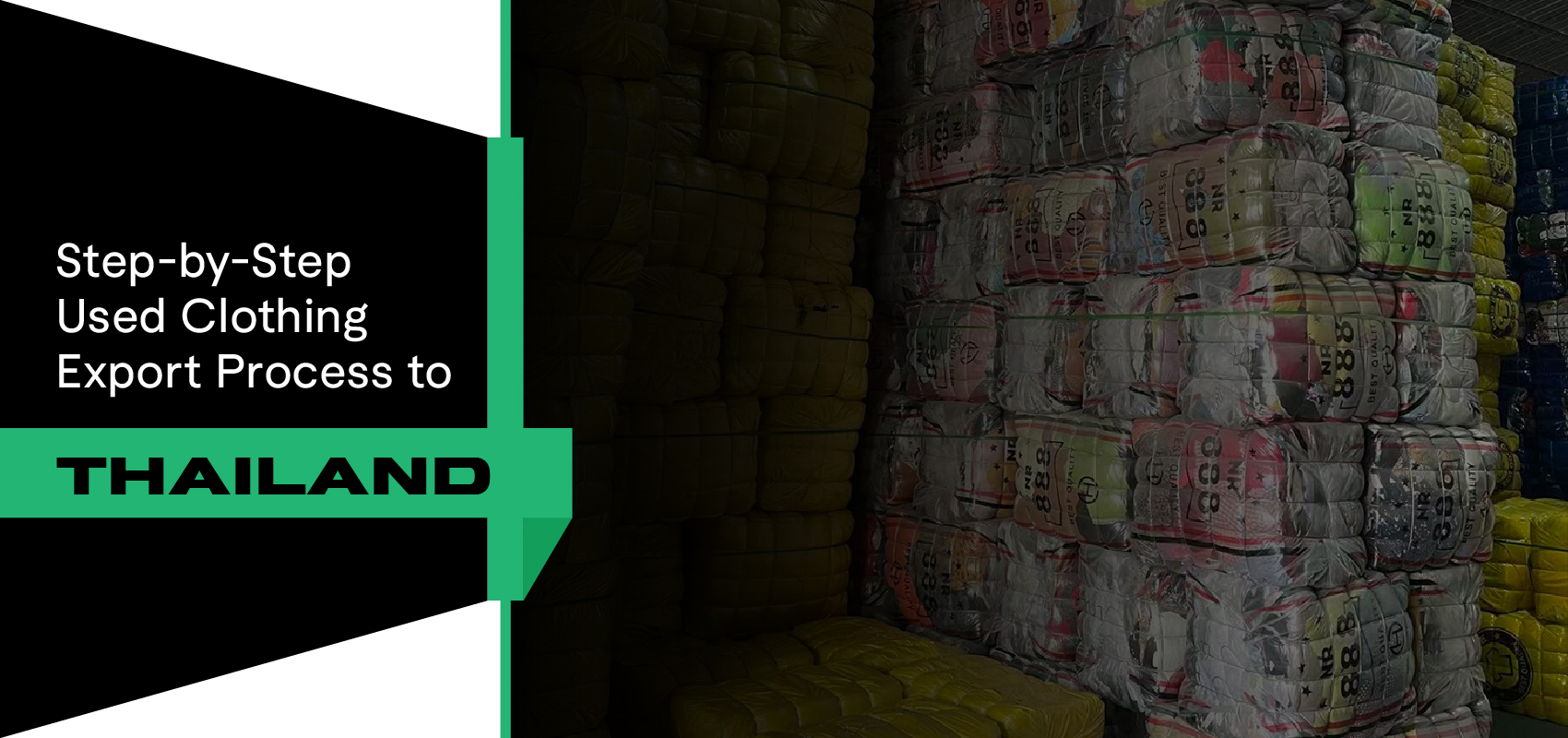
Garments are compressed into export bales, typically between 45kg and 100kg. Best practices include:
- Moisture protection
- Clear labeling
- Category consistency per bale
- Proper wrapping for sea freight
Overcompressed or mixed-category bales are common causes of buyer complaints.

Documentation Required for Export to Thailand
A standard used clothing export shipment usually requires:
- Commercial invoice
- Packing list
- Bill of lading
- Fumigation certificate (if required)
- Export declaration
Thailand importers must verify local compliance regulations before shipment.
Container Loading and Shipment
Most wholesale orders are shipped in 20ft or 40ft containers. Loading should be:
- Evenly distributed
- Moisture-protected
- Clearly labeled
Poor loading can damage bales and reduce garment value.
Common Export Mistakes to Avoid
- Skipping final inspection
- Mixing grades within bales
- Ignoring seasonal suitability
- Incomplete documentation
Experienced buyers often review the operational practices of a used clothing exporter for wholesale buyers in Thailand before placing repeat orders.
FAQs
How long does the used clothing export process take?
Depending on order size and container availability, preparation and shipment typically take several weeks from sorting to vessel departure.
Are fumigation certificates required for Thailand?
Requirements vary based on shipment type and port regulations. Buyers should confirm with local customs authorities.
What is the safest way to ship used clothing?
Sea freight in properly sealed containers remains the most common and cost-effective method.
Can buyers inspect goods before shipment?
Many exporters allow pre-shipment inspections, especially for large container-scale orders.
Conclusion
The used clothing export process involves more than packing garments into bales. From sorting and grading to documentation and container loading, every stage influences shipment success. Buyers serving Thailand who understand the used clothing export process can reduce risk, improve resale margins, and build stronger long-term supplier relationships.