
Introduction
Choosing the right used clothing exporter is a critical decision for wholesale buyers operating in or supplying the Thai market. Thailand has become a key hub for used clothing imports due to its strong distribution networks, resale markets, and access to regional buyers. However, not all exporters operate with the same standards, grading systems, or export compliance. Understanding how the used clothing trade works in practice helps buyers avoid quality issues, shipment delays, and regulatory problems. This guide explains how used clothing wholesale sourcing works, what matters most for Thailand-focused buyers, and how to evaluate exporters with confidence.
Understanding the Global Used Clothing Trade
The global used clothing industry is built around collection, sorting, grading, and bulk export. Clothing is sourced primarily from developed countries through donation programs, recycling centres, and textile recovery facilities. After collection, items are sorted by category, condition, and season before being packed for wholesale export.
For buyers, the key factor is not just volume but consistency. Reliable exporters maintain stable grading standards and transparent product categories so wholesalers know exactly what they are importing.
Why Thailand Is a Key Market for Used Clothing Imports
Thailand plays a dual role in the used clothing supply chain. It serves both as a consumer market and a redistribution point for neighbouring regions. Demand comes from local resale markets, export traders, and textile recycles.
Several factors make Thailand attractive for used clothing wholesale:
- Strong logistics and port infrastructure
- Established wholesale markets
- Regional trade access within Southeast Asia
Because of this, buyers sourcing wholesale used clothes in Thailand need exporters who understand destination-specific requirements rather than generic bulk shipments.
Used Clothing Exporter: How the Wholesale Supply Chain Works
A professional used clothing exporter follows a structured supply chain designed to minimise risk for buyers.
Sorting, Grading, and Packaging in Used Clothing Wholesale
After collection, clothing is sorted into grades such as cream, grade A, or mixed commercial quality. Each grade serves a different resale purpose. For example, higher-grade clothing is suitable for direct resale, while lower grades may be used for recycling or industrial reuse.
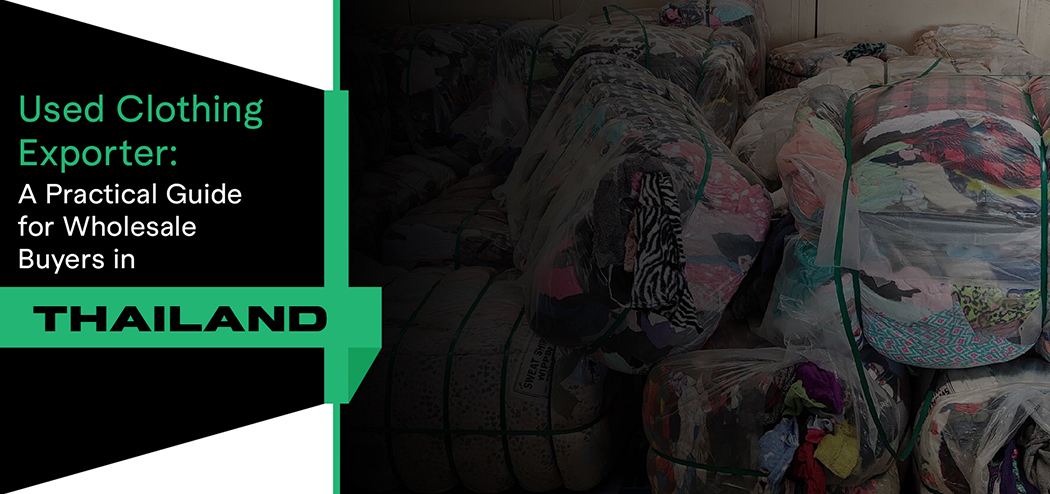
Packaging also matters. Export-grade bales must be compressed, labelled, and packed according to shipment and handling standards. Inconsistent grading or poor packaging is one of the most common issues buyers face when working with inexperienced suppliers.
Compliance, Documentation, and Export Readiness
Exporting used clothing requires proper documentation, including packing lists, invoices, and country-specific compliance paperwork. Some markets enforce strict regulations related to hygiene, fumigation, or textile classification.
An experienced exporter ensures shipments are compliant before dispatch, reducing the risk of customs delays or rejected cargo in Thailand.
Used Clothing Wholesale vs Local Sourcing: What Buyers Should Know
Local sourcing may appear convenient, but it often lacks scalability and quality control. Wholesale exporters offer:
- Bulk volumes with consistent grading
- Predictable pricing structures
- Export-ready packaging and documentation
For businesses targeting stable supply, working directly with a used clothing exporter provides better long-term reliability than fragmented local sourcing.
Common Challenges When Importing Wholesale Used Clothes in Thailand
Buyers frequently encounter avoidable problems due to poor supplier selection. Common challenges include:
- Misaligned grading expectations
- Mixed or damaged goods
- Incomplete export documents
- Delays caused by non-compliance
Most of these issues arise when exporters lack experience with Thailand-bound shipments. Clear communication and documented grading standards help prevent disputes.
How to Evaluate a Reliable Used Clothing Exporter
Before committing to bulk orders, buyers should assess exporters based on operational transparency rather than marketing claims.
Key evaluation points include:
- Clear grading definitions and bale specifications
- Willingness to share real product details
- Export documentation experience
- Consistent shipment history
A trustworthy exporter understands wholesale buyer needs and priorities long-term trade relationships over short-term sales.

Frequently Asked Questions
What does a used clothing exporter typically supply?
A used clothing exporter supplies sorted and graded second-hand garments in bulk bales for resale, recycling, or redistribution. Product categories usually include mixed clothing, seasonal wear, and specific garment types based on buyer demand.
Is used clothing wholesale legal in Thailand?
Used clothing imports are regulated in Thailand and require proper documentation. Buyers should work with exporters who understand destination requirements and provide compliant shipments to avoid customs issues.
How is quality controlled in used clothing wholesale?
Quality control is managed through grading systems, manual sorting, and inspection processes. Reliable exporters follow standardised grading to ensure buyers receive consistent product quality.
What is the difference between used clothing and recycled clothes?
Used clothing is intended for reuse or resale, while recycled clothes are processed into raw textile materials. Buyers should clarify their intended use before placing wholesale orders.
How can buyers reduce risk when sourcing wholesale used clothes in Thailand?
Risk is reduced by choosing experienced exporters, confirming grading standards in advance, and ensuring all documentation is prepared before shipment.
Conclusion
Working with a professional used clothing exporter is essential for wholesale buyers targeting the Thai market. Understanding how sourcing, grading, and export compliance work helps buyers make informed decisions and avoid costly mistakes. By focusing on transparency, experience, and practical supply chain knowledge, buyers can secure consistent wholesale used clothing supply that supports long-term business growth.