
Introduction
Sourcing vintage apparel at scale requires more than just access to old stock—it demands consistency, grading accuracy, and an understanding of international buyer expectations. For businesses targeting Southeast Asia, working with a reliable vintage clothing supplier is critical to maintaining product quality and brand reputation. Thailand, in particular, has become a strong resale and redistribution hub, making supplier selection even more important. This guide explains how wholesale vintage clothing supply works, what buyers should evaluate before placing bulk orders, and how experienced exporters support long-term, sustainable trade.
What Does a Vintage Clothing Supplier Actually Provide?
A professional vintage clothing supplier does more than collect secondhand garments. The process typically includes:
- Careful sourcing from verified collection channels
- Sorting by era, category, and wear condition
- Removal of damaged, unsellable, or overused items
- Packaging based on buyer specifications
For wholesale buyers, especially those operating in or supplying Thailand, reliability in grading and consistency across shipments is essential. Poor sorting leads to higher rejection rates and downstream losses.
How Vintage Clothing Wholesale Supply Works
Sourcing and Initial Screening
Vintage garments are sourced from post-consumer streams, donation networks, and recycling facilities. At this stage, items are screened to remove fast-fashion pieces that do not qualify as vintage.
Detailed Grading and Categorization
Grading is where experienced suppliers stand apart. Clothing is categorized by:
- Era (e.g., 80s, 90s, early 2000s)
- Product type (jackets, denim, shirts, dresses)
- Wear condition (minimal wear, good resale quality)
A dependable vintage clothing wholesale supplier maintains clear grading definitions so buyers know exactly what they are receiving.
Packing and Export Preparation
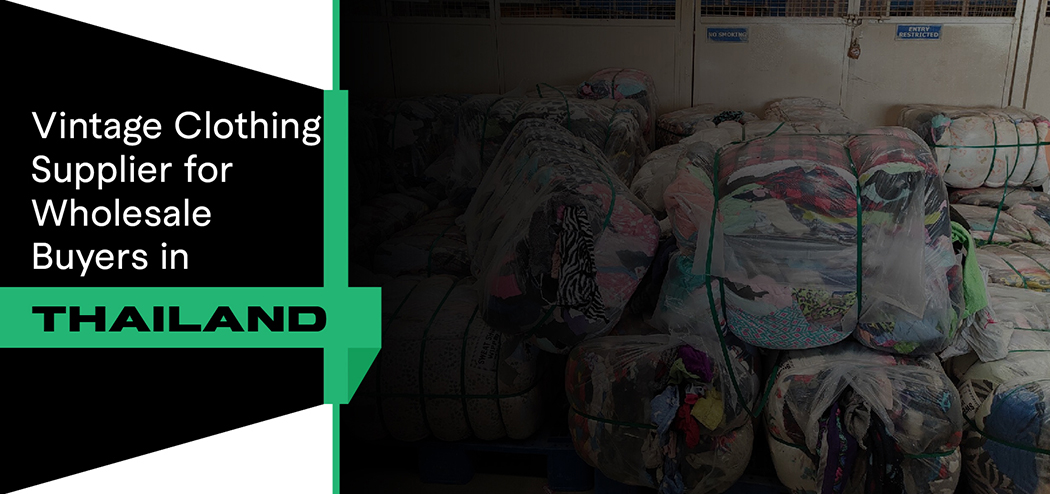
Wholesale orders are packed by weight or category, depending on buyer needs. Export documentation, compliance checks, and logistics planning are handled before shipment to avoid delays at destination ports.
Why Thailand Is a Key Market for Vintage Clothing Buyers
Thailand has developed into a major redistribution and resale market for vintage apparel. Buyers value:
- Strong local demand for retro and secondhand fashion
- Established wholesale markets and resale channels
- Strategic access to regional Southeast Asian trade
Because of this, many international buyers actively search for vintage clothing suppliers exporting to Thailand or suppliers that regularly export into the Thai market with proven logistics experience.

Common Mistakes Buyers Make When Choosing a Supplier
Overlooking Grading Transparency
Unclear grading standards often result in inconsistent quality. Buyers should always request grading details before confirming bulk orders.
Focusing Only on Price
Lower pricing may indicate mixed-quality loads or poor sorting. Long-term profitability depends on resale consistency, not just cost per kilogram.
Ignoring Export Experience
Suppliers without export expertise can cause customs delays, documentation issues, or shipment inconsistencies—especially for international markets like Thailand.
How Experienced Suppliers Support Wholesale Buyers
A professional supplier acts as a trade partner, not just a seller. This includes:
- Clear communication before and after shipment
- Flexible order sizing for testing new markets
- Consistent quality across repeat orders
- Understanding of resale trends and buyer feedback
These factors are especially important for buyers scaling operations in competitive markets.
Sustainability and Responsible Vintage Clothing Supply
Vintage clothing trade plays a role in extending garment life cycles and reducing textile waste. Ethical suppliers focus on:
- Responsible sourcing practices
- Minimizing landfill waste
- Supporting circular fashion systems
For wholesale buyers, sustainability is no longer optional—it is increasingly tied to brand trust and regulatory expectations.
Frequently Asked Questions
What qualifies clothing as “vintage” in wholesale trade?
In most wholesale contexts, vintage clothing refers to garments that are at least 20 years old and reflect styles, materials, or branding from a specific era.
Can vintage clothing be supplied in bulk quantities?
Yes. Established suppliers offer bulk vintage clothing sorted by category, era, or grade, depending on buyer requirements.
Is Thailand a strong resale market for vintage apparel?
Thailand has active resale markets and regional trade connections, making it a strategic destination for wholesale vintage clothing distribution.
How is quality maintained in large shipments?
Quality is maintained through multi-stage sorting, clear grading standards, and final inspections before packing and export.
Conclusion
Choosing the right vintage clothing supplier is essential for wholesale buyers seeking consistency, resale value, and long-term reliability. For those targeting Southeast Asian markets, including Thailand, supplier experience in grading, logistics, and export compliance directly impacts business success. By working with knowledgeable partners who understand vintage trade realities, buyers can build sustainable supply chains that support growth and market trust.