
Introduction
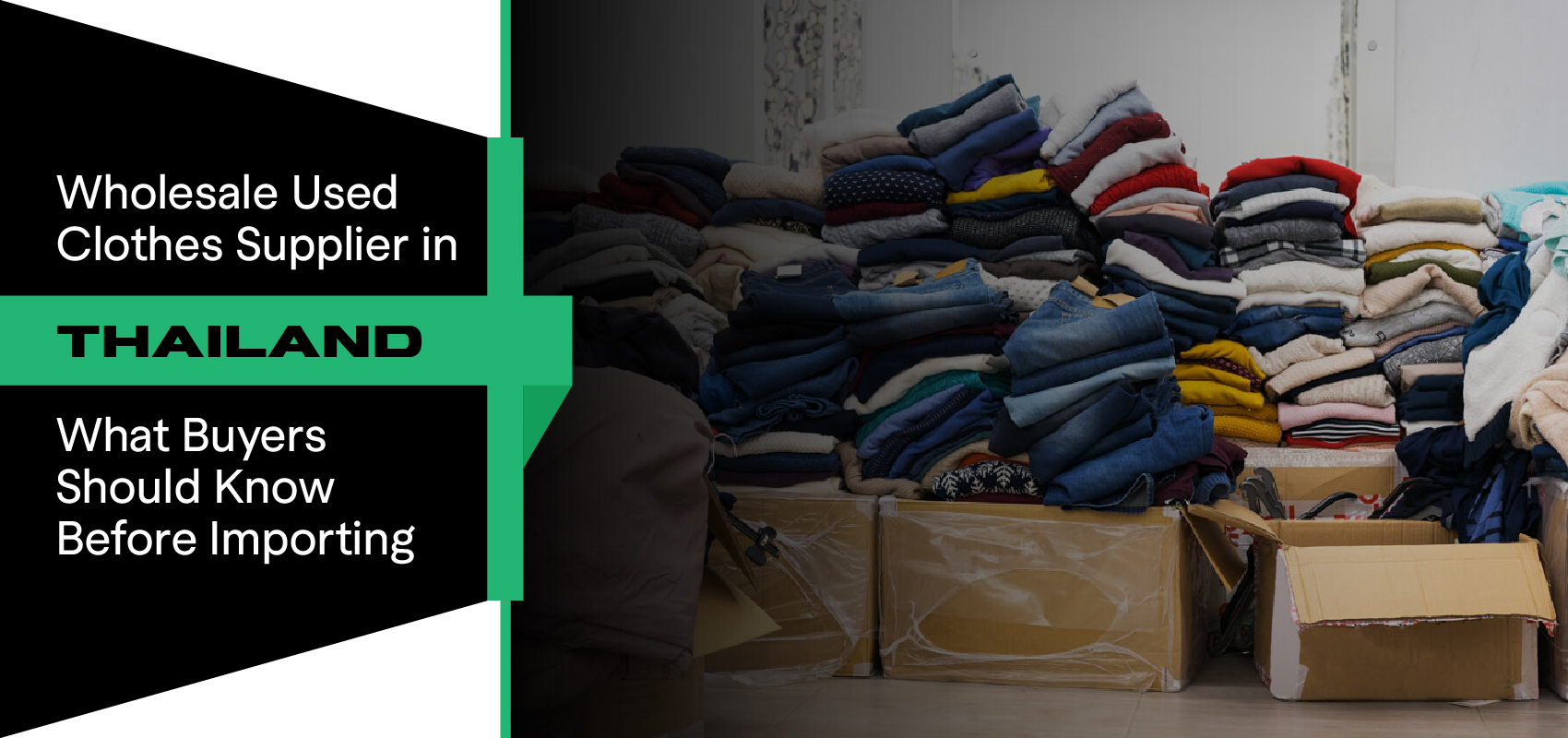
Finding a reliable wholesale used clothes supplier in Thailand is one of the most important decisions for importers, wholesalers, and resale businesses. While pricing often receives the most attention, successful buyers know that grading consistency, product quality, export experience, and supply reliability have a much greater impact on long-term profitability.
Thailand continues to be an important market for second-hand clothing due to strong consumer demand, active wholesale networks, and growing interest in sustainable fashion. However, not every supplier follows the same standards. Understanding how wholesale used clothing sourcing works can help buyers reduce risk, improve inventory quality, and build a dependable supply chain.
Why Wholesale Used Clothing Remains in High Demand
The global second-hand clothing industry has grown because buyers are seeking affordable and reusable garments that still offer commercial value.
For wholesalers, used clothing provides:
- Lower sourcing costs compared to new apparel
- Strong resale potential
- Diverse product categories
- Access to sustainable retail markets
In Thailand, wholesale buyers often purchase used clothing for resale shops, local markets, distributors, and export channels serving neighboring countries.
The key challenge is not finding products—it is finding a supplier capable of delivering consistent quality across every shipment.
Also Read: Used Clothing Exporter: A Practical Guide for Wholesale Buyers in Thailand
How a Wholesale Used Clothes Supplier in Thailand Supports Buyers
A professional supplier does much more than simply sell second-hand garments.
The wholesale process typically includes:
Collection and Sourcing
Clothing is sourced through collection networks, textile recovery programs, and recycling channels. The quality of the original sourcing process directly affects the quality of the final shipment.
Sorting and Classification
After collection, garments are sorted according to:
- Category
- Gender
- Season
- Fabric type
- Overall condition
Proper sorting helps buyers receive products that match their market requirements.
Grading and Quality Control
Grading is one of the most important stages in wholesale clothing exports.
Experienced suppliers separate garments into clearly defined quality grades, allowing buyers to understand exactly what they are purchasing.
Without a grading system, shipment quality becomes inconsistent and difficult to resell.
Common Problems Buyers Face When Importing Used Clothing
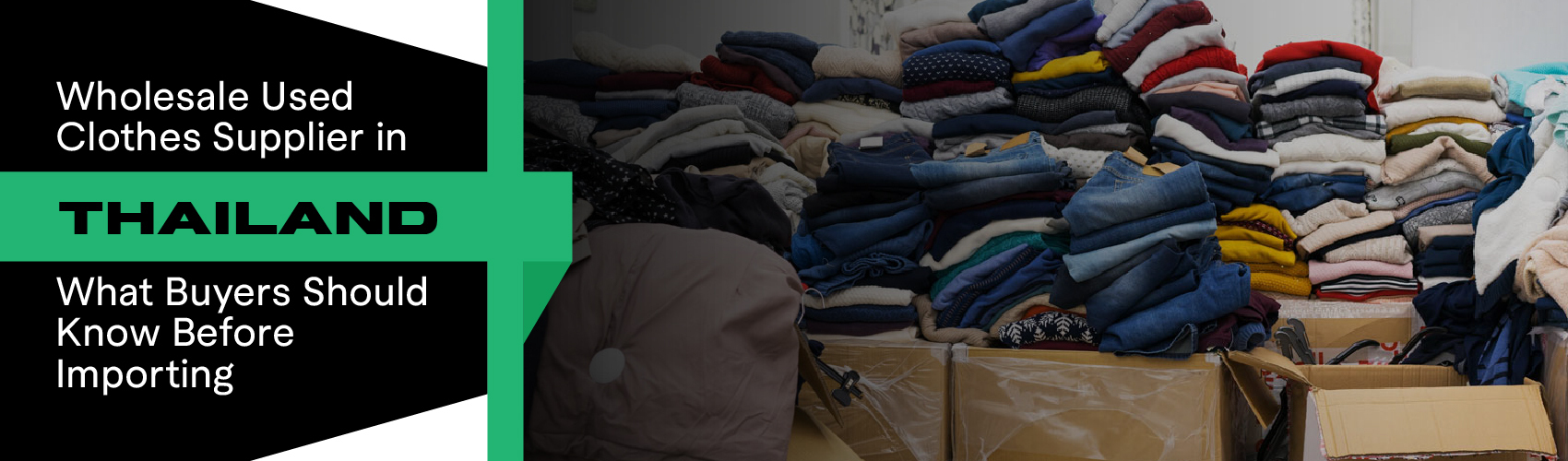
Many wholesale buyers focus heavily on pricing and overlook operational factors that have a much greater impact on profitability.
Some of the most common issues include:
Inconsistent Product Quality
A supplier may provide excellent quality in one shipment but poor quality in the next.
This usually happens when grading standards are unclear or poorly managed.
Mixed Product Categories
Buyers expecting specific clothing categories often receive mixed loads that do not align with market demand.
Proper sorting procedures help avoid this problem.
Documentation Issues
International shipments require accurate documentation.
Missing paperwork can cause customs delays, additional costs, or shipment holds.
Poor Communication
Communication problems frequently create misunderstandings regarding grades, quantities, packaging, and delivery schedules.
Reliable suppliers maintain clear communication throughout the process.
Also Read: How Used Clothing Is Sorted for Export to Thailand
What Makes a Reliable Used Clothing Exporter in Thailand
Not every exporter operates with the same level of experience.
When evaluating suppliers, buyers should focus on operational transparency rather than marketing claims.
Important factors include:
Clear Grading Standards
Suppliers should be able to explain exactly how garments are graded and categorized.
Export Experience
A supplier with international shipping experience understands documentation requirements, packaging standards, and logistics coordination.
Consistent Supply Capacity
Buyers need confidence that future orders can be fulfilled at similar quality levels.
Quality Control Procedures
Reliable exporters inspect products before packaging to reduce complaints and returns.
The Role of Packaging in Wholesale Used Clothing
Packaging is often overlooked but plays an important role in protecting shipment quality.
Export-ready clothing is commonly compressed into bales to:
- Maximize container space
- Reduce transportation costs
- Protect garments during transit
- Simplify inventory management
Professional packaging also helps buyers handle incoming inventory more efficiently after arrival.
How Buyers Can Reduce Import Risks
Importing used clothing involves several variables, but most risks can be minimized through proper supplier evaluation.
Best practices include:
- Requesting detailed grading information
- Confirming product categories before shipment
- Reviewing packaging specifications
- Verifying export experience
- Establishing clear communication channels
Buyers who follow these steps generally experience fewer quality disputes and smoother transactions.
Also Read: Used Clothing Grading System Explained for Thailand Buyers
Frequently Asked Questions
What does a wholesale used clothes supplier typically provide?
A wholesale supplier provides sorted and graded second-hand garments in bulk quantities. Products may include mixed clothing, seasonal apparel, and category-specific garments depending on buyer requirements.
Why is grading important in used clothing wholesale?
Grading helps ensure consistency across shipments. It allows buyers to understand expected quality levels and reduces the risk of receiving unsuitable inventory.
Is Thailand a strong market for wholesale used clothing?
Yes. Thailand has established wholesale networks, active resale markets, and strong regional trade connections that support continued demand for second-hand clothing.
How do exporters maintain product quality?
Quality is maintained through sorting, grading, inspection, and packaging processes designed to meet wholesale resale standards.
What should buyers evaluate before choosing a supplier?
Buyers should review grading systems, export experience, communication practices, supply capacity, and quality control procedures before committing to long-term orders.
Conclusion
Choosing the right wholesale used clothes supplier in Thailand requires more than comparing prices. Buyers should focus on grading standards, sourcing quality, export experience, and supply consistency. Businesses that work with experienced suppliers are better positioned to reduce risk, maintain product quality, and build sustainable wholesale operations. Understanding these fundamentals helps importers make informed purchasing decisions and create stronger long-term supply chains.