
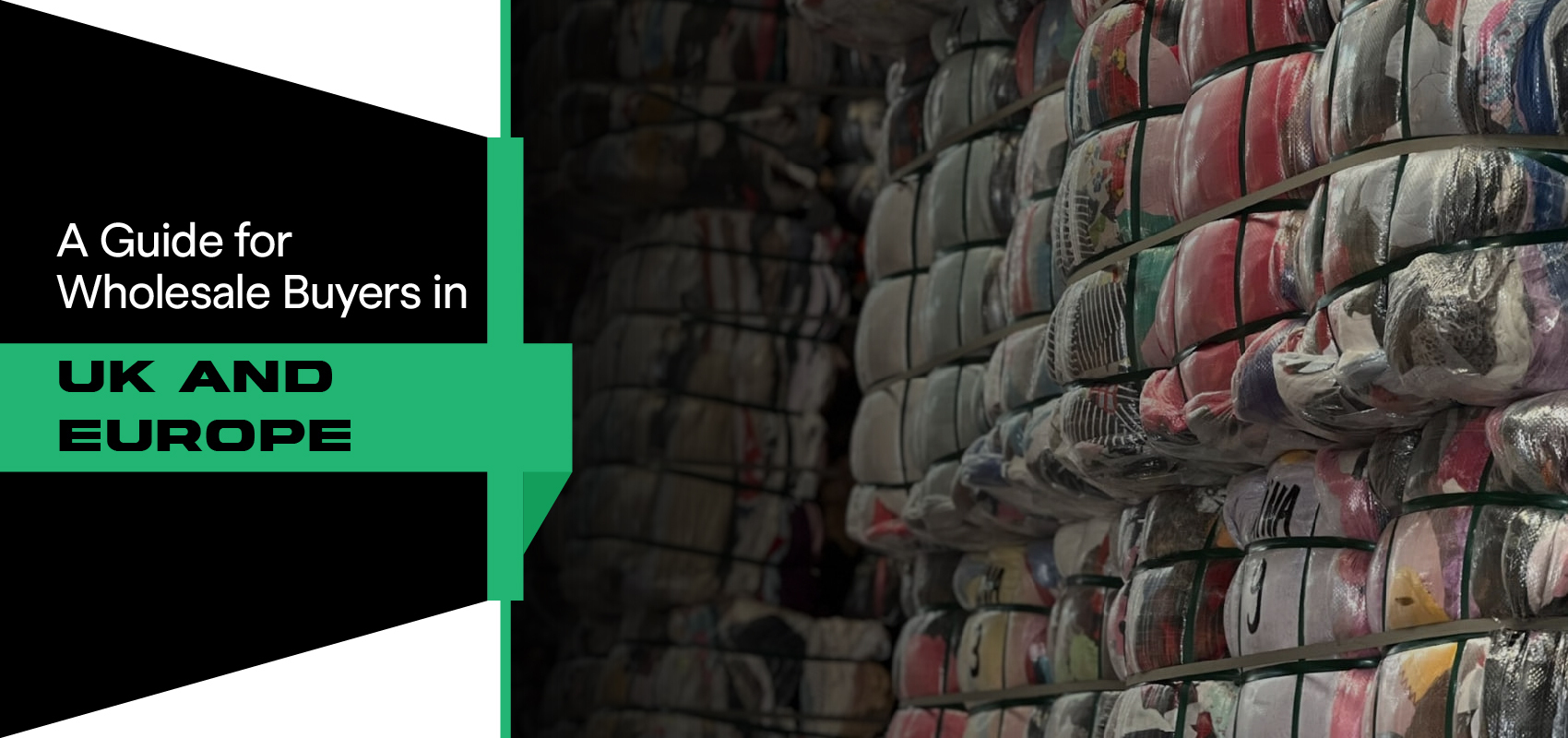
Wholesale Buyers in the UK and Europe
For wholesale buyers in the UK and across Europe, not all vintage clothing is the same. The difference between original branded vintage clothing and mixed vintage goes well beyond labelling — it shapes pricing, resale margins, retail positioning, and buyer expectations at every stage of the supply chain. Yet many importers still approach suppliers without a clear understanding of what these categories mean in practice, which leads to mismatched orders, unpredictable stock, and lost margin. This guide explains what genuine, original branded vintage clothing for UK and Europe buyers actually involves, how it compares to mixed vintage wholesale, and what to verify before committing to an order.
What Does “Original Branded Vintage Clothing” Mean in the Wholesale Market?
Original branded vintage clothing refers to authentic second-hand garments carrying recognisable labels from established international brands — Nike, Adidas, Levi’s, Carhartt, The North Face, Champion, Ralph Lauren, Patagonia, and similar names. These are items that were originally manufactured and sold under those brands, which have since entered the second-hand supply chain through donation centres, thrift stores, and textile collection operations.
What makes them “original” is that the label, the branding, the construction, and the garment itself are all genuine. They are not reproductions. They are not unbranded pieces mixed in with branded stock to inflate perceived value. When a wholesale buyer in the UK or Europe orders original branded vintage, they expect a consistent, verifiable proportion of recognisable labels throughout the shipment.
This is fundamentally different from unbranded vintage — which may contain good-quality second-hand garments without major label value — and from mixed vintage, which is a separate category with its own buyer profile entirely.
Why Brand Authenticity Matters Specifically for UK and European Resellers
The UK and European vintage resale market operates at a higher level of brand sensitivity than most other regions.
Buyers on Depop, Vinted, eBay, and in physical vintage stores identify branded pieces immediately. A Nike windbreaker from the 1990s commands a specific price point. A Carhartt jacket in good condition sells faster than a generic equivalent. Patagonia fleeces carry a consistent resale value that end customers already understand before they walk through the door.
When an importer sources stock described as branded vintage and receives a significant proportion of unlabelled garments mixed in, the entire pricing model breaks down. Resellers lose their expected margin. Repeat orders stop.
This is why clarifying exactly what “branded” means with a supplier — before any order is confirmed — is one of the most important decisions a wholesale buyer makes.
How Original Branded Vintage Differs from Mix Vintage Wholesale
Mix vintage is a separate product category with a different buyer profile, different pricing logic, and different end markets.
Mix vintage refers to wholesale bales containing a variety of second-hand garments without a guaranteed proportion of branded items. Quality may still be good — items are typically sorted and graded — but the composition is not curated for brand recognition. Branded pieces may appear in a mix vintage bale, but they are not selected, guaranteed, or priced as such.
Mix vintage suits buyers who:
- Operate high-volume kilo shops where cost-per-kilogram is the primary concern
- Supply discount clothing to markets or charity networks
- Serve developing markets where brand recognition matters less than overall garment condition and volume
- Want maximum quantity at a lower cost per kilogram
Original branded vintage clothing suits buyers who:
- Supply established vintage stores with brand-conscious customers
- Operate online resale channels where branded pieces command significantly higher prices per item
- Run boutique vintage retail where the branded element is central to the shop’s identity
- Export or supply to markets where label recognition drives clear price premiums
The distinction is not primarily about quality — it is about composition guarantee, buyer intent, and end-market fit. Both categories can be well-graded. What separates them is what the buyer is actually paying for.
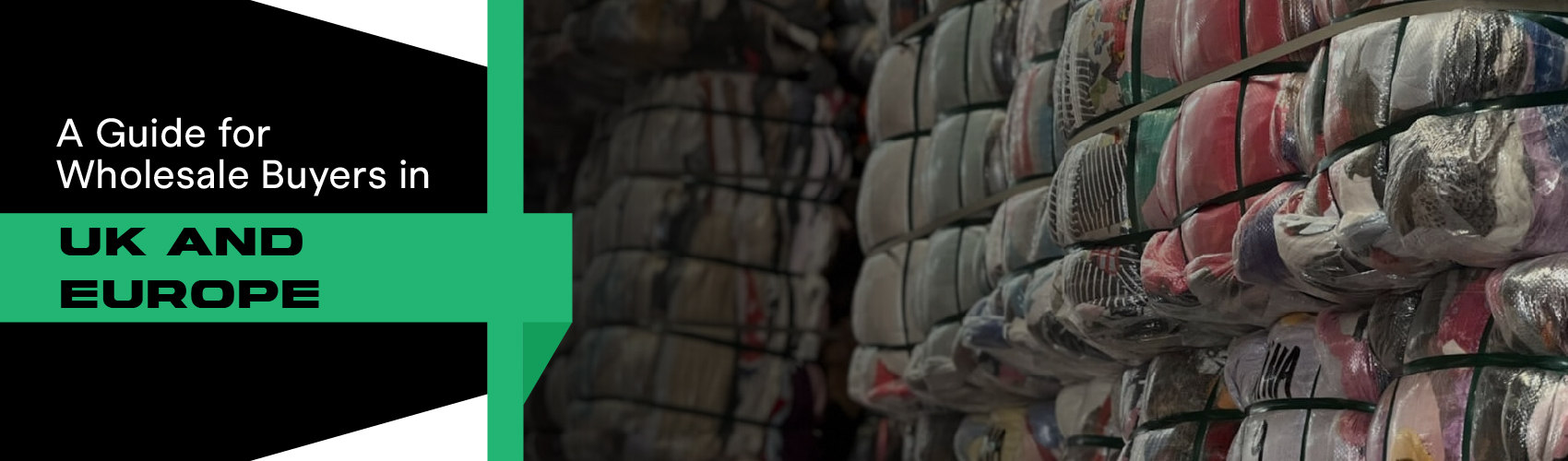
The Grading Difference Between Branded and Mixed Vintage
Both original branded vintage clothing and mixed vintage go through grading, but what grading covers differs meaningfully.
For mixed vintage, grading typically refers to garment condition:
- Grade A: Clean, no significant damage, wearable immediately
- Grade B: Minor faults, small stains or light wear, still resaleable with appropriate pricing
- Grade C or mixed: Condition varies more widely, often requires further sorting by the buyer
For original, branded vintage, grading involves both condition and composition. A wholesale buyer in the UK or Europe needs to know not just that garments are in good condition, but that a consistent proportion of recognisable brand labels are present throughout the bale or container.
Some suppliers provide a brand percentage estimate — for example, stating that a minimum of 70–80% of items carry labels from a defined brand list. Others work on a best-efforts basis, depending on available stock at packing time.
Buyers relying on branded resale margins should always clarify:
- How brand composition is defined and tracked
- Which labels qualify as “branded” in the supplier’s classification
- Whether brand percentages are guaranteed or approximate
- What the resolution process is if a shipment does not match the described composition
What Wholesale Buyers in the UK and Europe Typically Require
The UK and European branded vintage wholesale market carries specific expectations that differ from most other buying environments.
Consistent quality across shipments. Buyers building resale businesses need predictable stock. A first container that meets expectations, followed by a second that falls short, creates inventory problems and damages the buyer’s own customer relationships.
Verifiable brand composition. As discussed, this means clear information about which brands are present and in what proportion — not vague assurances.
Clean, displayable garments. Most UK and European vintage channels expect garments to be ready to photograph or put on a rack without additional processing. Heavily soiled items reduce usable yield even when technically branded.
Complete export documentation. Buyers importing into the UK or EU need proper paperwork — a commercial invoice, a packing list, a certificate of origin, and, where applicable, a fumigation certificate depending on the origin country and port requirements. This should not be an afterthought.
Realistic MOQ and container options. Established wholesale buyers in the UK and Europe typically order at the container level, with 20ft containers being common for first shipments. Some suppliers can accommodate consolidated, smaller orders for new buyers, testing quality before scaling.
How to Verify What You Are Ordering Before Committing
This is where many buyers in this market run into problems.
Verifying original branded vintage clothing from a supplier operating internationally requires more due diligence than a domestic purchase.
Request pre-shipment photos or video. Any credible supplier of branded vintage should be willing to share photos of bale contents or video walkthroughs before loading. This gives buyers a realistic view of which brands and conditions are represented.
Ask for a sample bale or sample shipment. Before placing a full container order, many experienced importers request a smaller sample. This allows quality and brand composition to be assessed against the supplier’s descriptions with minimal financial exposure.
Clarify packing and bale structure. Ask how bales are packed — by weight or by piece count — and what the average piece count per bale looks like for branded vintage specifically. This directly affects how buyers plan yield and pricing.
Confirm the documentation package. A reliable exporter should provide a commercial invoice with HS code references, a packing list that matches the shipment, and any certificates required for customs clearance. For UK buyers post-Brexit, country of origin documentation may affect applicable duty rates.
Build the relationship before scaling volume. Buyers who start with one verified container, review the yield, and then scale subsequent orders based on actual results tend to build more stable sourcing relationships than those who immediately order at maximum volume on limited information.
How Pakistan-Based Exporters Supply Branded Vintage Clothing to UK and European Buyers
Pakistan has a well-established second-hand textile industry with extensive sorting and grading infrastructure built around international export standards. Wholesale buyers in the UK and Europe who source original branded vintage clothing from Pakistani exporters benefit from competitive pricing, significant volume capacity, and experienced export operations.
Garments are sourced from verified collection networks, sorted by category, inspected for condition, and graded before packing for export. For branded vintage wholesale, the sourcing process specifically involves identifying and separating genuine labelled branded pieces from unbranded stock, inspecting condition, and preparing bales according to buyer specifications.
Shipments are accompanied by the full documentation required for UK and European customs clearance.
Buyers looking to source original branded vintage clothing wholesale for the UK and Europe from a Pakistan-based exporter can make direct inquiries to discuss product composition, grading standards, container options, and lead times.
Frequently Asked Questions
What is the difference between original branded vintage and mixed vintage for wholesale buyers?
Original branded vintage refers to second-hand garments from recognisable international brands — Nike, Adidas, Levi’s, Carhartt, and similar labels — where brand composition is part of what the buyer is paying for. Mix vintage is a broader category of second-hand garments graded by condition but without a guarantee of branded composition. For resellers in the UK and European markets, the distinction matters because branded items command higher individual resale prices and attract a different customer base.
How is original, branded vintage clothing graded before wholesale export?
Grading for branded vintage involves assessing both garment condition and brand composition. Condition grading covers cleanliness, the absence of major damage, and wearability. Composition assessment involves verifying the proportion of genuine branded labels present in the bale or container. Reputable exporters can provide photos, videos, or written grading criteria so buyers understand what they are receiving before shipment.
Can I specify which brands I want in a wholesale branded vintage order?
Most exporters can discuss preferred brand categories — such as American sportswear, workwear, or denim — but exact brand composition cannot usually be guaranteed due to the nature of second-hand sourcing. Experienced suppliers can focus a container heavily on requested categories, but buyers should treat brand percentages as estimates rather than fixed specifications unless explicitly guaranteed.
What is the minimum order for original branded vintage clothing from a wholesale exporter?
Most international exporters work at the container level, with a 20ft container being the standard starting point. Some suppliers accommodate smaller consolidated shipments for first-time buyers who want to verify quality before scaling. The appropriate starting point depends on your budget, storage capacity, and the resale channels you are supplying.
What documents do I need to import branded vintage clothing into the UK?
UK imports require a commercial invoice with HS code classification, a packing list, and a bill of lading. Depending on origin, a certificate of origin may affect applicable duty rates. Fumigation certificates are standard for used textile shipments from certain origins. Working with a UK freight forwarder or customs broker is advisable, particularly for first-time importers.
What makes Pakistan a reliable origin for original branded vintage clothing wholesale?
Pakistan has a long-established textile processing and second-hand garment export industry. The infrastructure for sorting, grading, and preparing export-ready branded vintage shipments is well-developed. Pakistani exporters typically offer competitive pricing relative to UK or Western European suppliers, with the capacity to supply consistent container volumes to international wholesale buyers.
Conclusion
For wholesale buyers in the UK and across Europe, understanding the difference between original branded vintage clothing and mixed vintage is the foundation of a sound sourcing decision. Buyers who enter this process clearly — knowing what composition they need, how to verify it, and what documentation to expect — build more predictable import operations and stronger supplier relationships over time. Whether you are placing your first container order or reviewing an existing sourcing arrangement, applying this level of clarity at the outset is consistently more effective than resolving mismatches after the shipment arrives.