
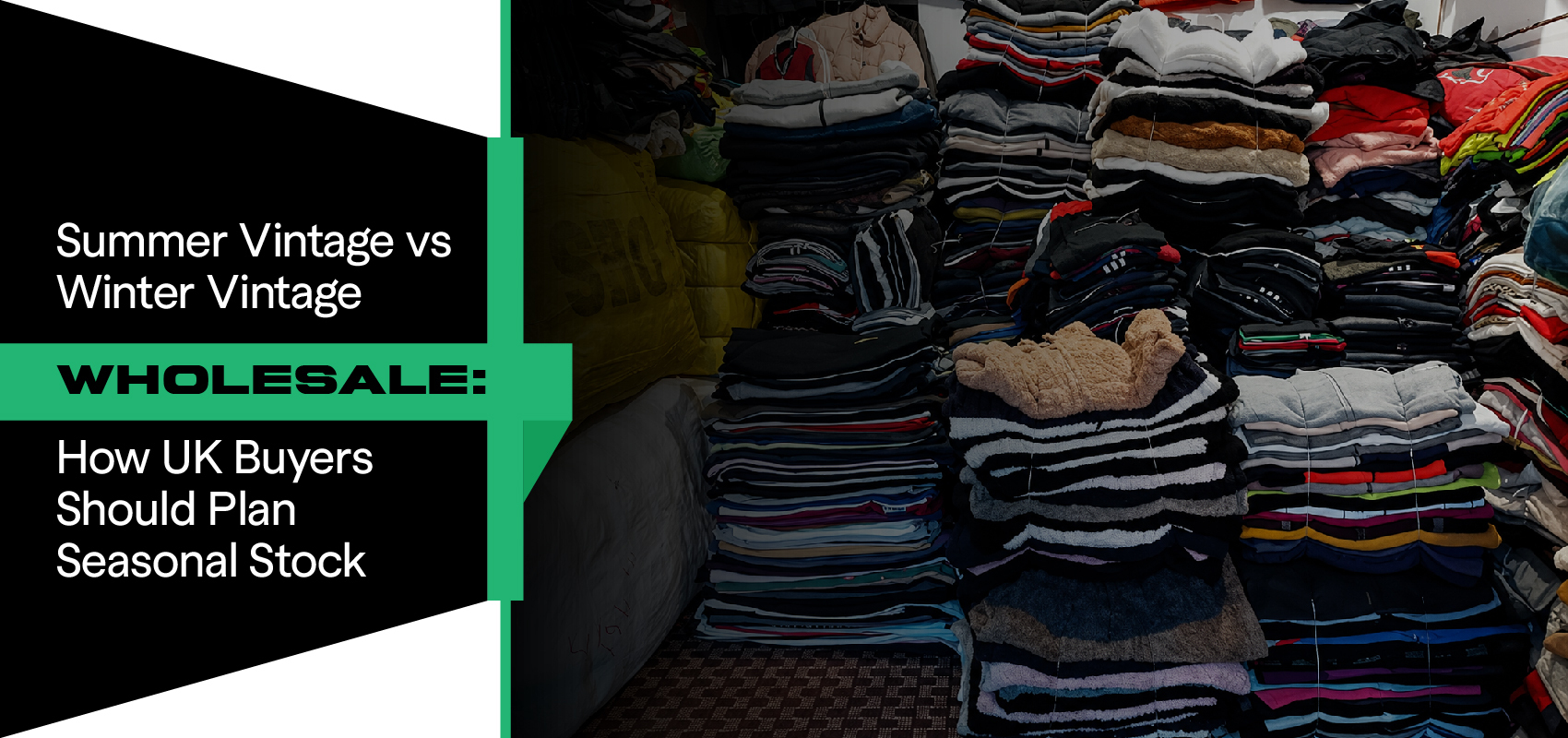
For wholesale vintage buyers in the UK, seasonal inventory composition is one of the most critical commercial decisions in a purchasing cycle—and one that is frequently underestimated until operational bottlenecks occur.
Receiving a container of heavy winter coats in June or lightweight t-shirts in November does not just create warehouse storage issues; it ties up working capital in slow-moving stock, delays revenue generation, and disrupts retail scheduling.
Understanding the differences between summer and winter inventory, knowing when to place bulk orders, and mastering vintage clothing seasonal sourcing are essential strategies for protecting profit margins and maintaining predictable cash flow.
What Is Summer Vintage Clothing Wholesale?
Summer vintage wholesale covers lightweight second-hand garments suited to warm-weather retail—designed specifically for the spring-to-summer selling window (March through August in the UK).
In the UK vintage market, summer stock is defined as much by visual identity and subculture styling as by climate suitability. The pieces that perform best across e-commerce apps, street markets, and physical boutiques carry an explicit seasonal aesthetic that consumers actively seek out during warmer months.
Core Summer Vintage Garment Categories
When building a summer vintage clothing wholesale UK order, buyers should look for high-demand, high-turnover staples:
- Printed T-Shirts & Graphic Tees: The highest-volume sub-category in summer vintage. Single-stitch tees, vintage sports graphics, and band shirts move consistently across Depop, Vinted, and festival stalls.
- Lightweight & Camp Collar Shirts: Casual button-downs, Hawaiian prints, linen blends, and short-sleeve patterned shirts suitable for layering.
- Shorts & Casual Bottoms: Vintage denim shorts, cut-offs, cargo shorts, and lightweight cotton trousers.
- Summer Dresses & Skirts: 1980s-to-Y2K lightweight dresses, slip skirts, and floral sundresses.
- Thin Knitwear & Light Outerwear: Cotton crewnecks, unlined windbreakers, and light track jackets built for unpredictable British weather and cool summer evenings.
What Is Winter Vintage Wholesale?
Winter vintage wholesale encompasses heavyweight garments tailored for the autumn-and-winter retail window (September through February). As temperatures drop across the UK and Europe, consumer demand shifts rapidly toward heavy outerwear, warm knitwear, and durable layering pieces.
In the UK market, quality second-hand outerwear remains one of the most lucrative vintage categories. Rising retail prices for new outerwear, combined with growing consumer interest in sustainable fashion, make winter vintage wholesale Europe and UK shipments highly reliable revenue generators.
Core Winter Vintage Garment Categories
A high-performing bulk vintage seasonal UK winter shipment focuses on heavy-duty, premium-value items:
- Coats & Padded Outerwear: The highest unit-value category in winter vintage. Includes puffer jackets, heavy wool coats, shearling jackets, and branded down coats.
- Thick Knitwear & Sweaters: Wool jumpers, heavy cable-knits, cardigans, and patterned sweaters with strong label appeal (e.g., Ralph Lauren, Tommy Hilfiger).
- Branded Fleece: 1990s and 2000s outdoor leisure fleeces (e.g., The North Face, Patagonia, Columbia) remain top sellers across UK retail channels.
- Heavy Denim & Workwear: Thick-grade denim jackets, lined work shirts, Carhartt-style utility jackets, and heavy duck-canvas trousers.
- Sweatshirts & Hoodies: Branded varsity hoodies, collegiate crewnecks, and heavyweight fleece-lined tops.
Why Seasonal Composition Impacts Working Capital
Separating summer and winter inventory into distinct container orders comes down to two operational factors: yield timing and capital efficiency.
Undifferentiated Mixed Bales
Arrives with a 50/50 summer/winter split regardless of season
50% of stock is immediately sellable; 50% requires months of warehousing
Ties up working capital in unseasonal deadstock
Creates storage bottlenecks and increases inventory holding costs
vs
Targeted Seasonal Bales
100% of inventory matches the upcoming retail season
Fast stock rotation enables immediate capital reinvestment
Maximizes warehouse space utilization
Aligns inventory directly with peak consumer purchasing demand
When a buyer receives a general, unsegregated container, half the shipment may sit in storage for six months before the climate matches the product. Stock sitting in a warehouse generates no yield while consuming expensive floor space. Sourcing seasonal categories separately aligns inventory directly with your active sales calendar, ensuring rapid stock turn and healthy cash flow.
The Optimal Buying Calendar for UK Wholesale Importers
Timing is the most critical element in seasonal vintage buying in the UK. Overseas container shipping from sourcing hubs in South Asia (such as Pakistan) typically takes 3 to 6 weeks from dispatch to port arrival. Ordering too late severely compresses your retail selling window.
UK SEASONAL VINTAGE ORDERING TIMELINE
JAN FEB MAR APR MAY JUN JUL AUG SEP OCT NOV DEC
SUMMER ORDER WINDOW – WINTER ORDER WINDOW
(Arrives Mar – Apr) (Arrives Aug – Sep)
1. Planning Summer Vintage Sourcing (Order Window: January – March)
- Target Arrival: March to April.
- Market Context: Positions your inventory right at the start of the UK spring/summer transition, hitting peak demand for outdoor markets, festival season prep, and online platform refreshes.
- The Risk of Delay: Ordering in May or June means stock arrives mid-to-late summer, forcing price markdowns to clear inventory before autumn.
2. Planning Winter Vintage Sourcing (Order Window: June – August)
- Target Arrival: August to September.
- Market Context: Aligns with the autumn retail launch when UK shoppers begin buying coats, fleece, and heavy knitwear at full retail margins.
- The Risk of Delay: Ordering in October or November results in winter stock arriving midway through the season, cutting your high-margin selling period in half.
Summer & Winter Mix: When Does a Combined Order Make Sense?
While seasonal separation is ideal for specialized stockists, a combined Summer Winter Vintage Wholesale UK shipment is practical in specific business models:
- Year-Round High-Volume Online Resellers: Sellers listing dozens of new items daily on Depop, Vinted, or eBay can process mixed inventory continuously for global buyers in different climates.
- First-Time Importers: Buyers making their first container order can use a mixed seasonal bale to test market demand and evaluate exporter grading standards without making a single seasonal bet.
- Mild-Climate Regional Distribution: Importers supplying warmer European markets where climate shifts are less extreme can maintain steady demand for mixed weight stock year-round.
How Seasonal Vintage Is Sorted and Graded for Export
Preparing season-specific bales requires dedicated sorting labor at the export facility:
- Summer Sorting: Sorting teams filter out heavy wools, thick fleeces, and padded coats, focusing strictly on lightweight fabrics, summer color palettes, and warm-weather cuts.
- Winter Sorting: Garments are screened for fabric density, insulation value, and outerwear durability. Sub-categories like fleeces, heavy workwear, and coats are segregated into dedicated bales.
- Quality Assurance: Reputable exporters offer pre-shipment photo or video inspections before loading to confirm that bale composition strictly matches the seasonal order agreement.
Aligning Bulk Purchasing with the UK Retail Calendar
To maximize profitability, map your wholesale container orders directly to the UK resale cycle:
- Spring/Summer Window (March – August): High activity in festival wear, single-stitch tees, denim shorts, and lightweight retro rain jackets. Kilo sales and outdoor vintage markets peak.
- Autumn/Winter Window (September – February): Peak demand for branded puffers, Carhartt jackets, heavyweight fleeces, and wool knits. The Q4 Christmas shopping period creates a strong spike in demand for premium vintage outerwear as gifts.
Frequently Asked Questions
What is the main difference between summer and winter vintage wholesale?
Summer vintage wholesale consists of lightweight warm-weather garments like graphic tees, short-sleeve shirts, shorts, and summer dresses. Winter vintage wholesale includes heavy cold-weather apparel like padded coats, fleeces, thick knitwear, and heavy denim. Sorting them separately ensures stock arrives ready for immediate seasonal sale.
When should UK buyers place orders for summer vintage stock?
The optimal ordering window for summer vintage wholesale is between January and March. Accounting for container ocean freight lead times of 3 to 6 weeks, stock ordered in this window arrives in March or April—perfectly timed for the start of the UK spring/summer retail season.
When is the best time to order winter vintage wholesale?
UK buyers should place bulk winter vintage orders between June and August. This ensures inventory arrives in August or September, capturing maximum full-price retail demand at the start of the autumn/winter season.
Can I order a customized seasonal mix in a single container?
Yes. Exporters with dedicated sorting facilities allow buyers to specify exact proportions of summer and winter bales in a single container order, giving year-round resellers a balanced inventory mix.
Is seasonal vintage wholesale more expensive per kilo than general mix?
Seasonally sorted bales may carry a slightly higher price per kilogram due to the extra labor required to segregate garments by weight and category. However, the higher sell-through rate and reduced storage costs of seasonally relevant stock easily compensate for the modest price difference.
Final Thoughts
Strategic seasonal planning is a major profit driver for UK wholesale vintage buyers. Delivering the right stock at the beginning of a selling season—rather than mid-way through—ensures maximum margins, faster stock turn, and optimal working capital performance.
By mapping your bulk vintage seasonal UK purchasing schedule to ocean freight transit times and domestic retail rhythms, you can build a streamlined, highly profitable vintage supply chain year-round.