
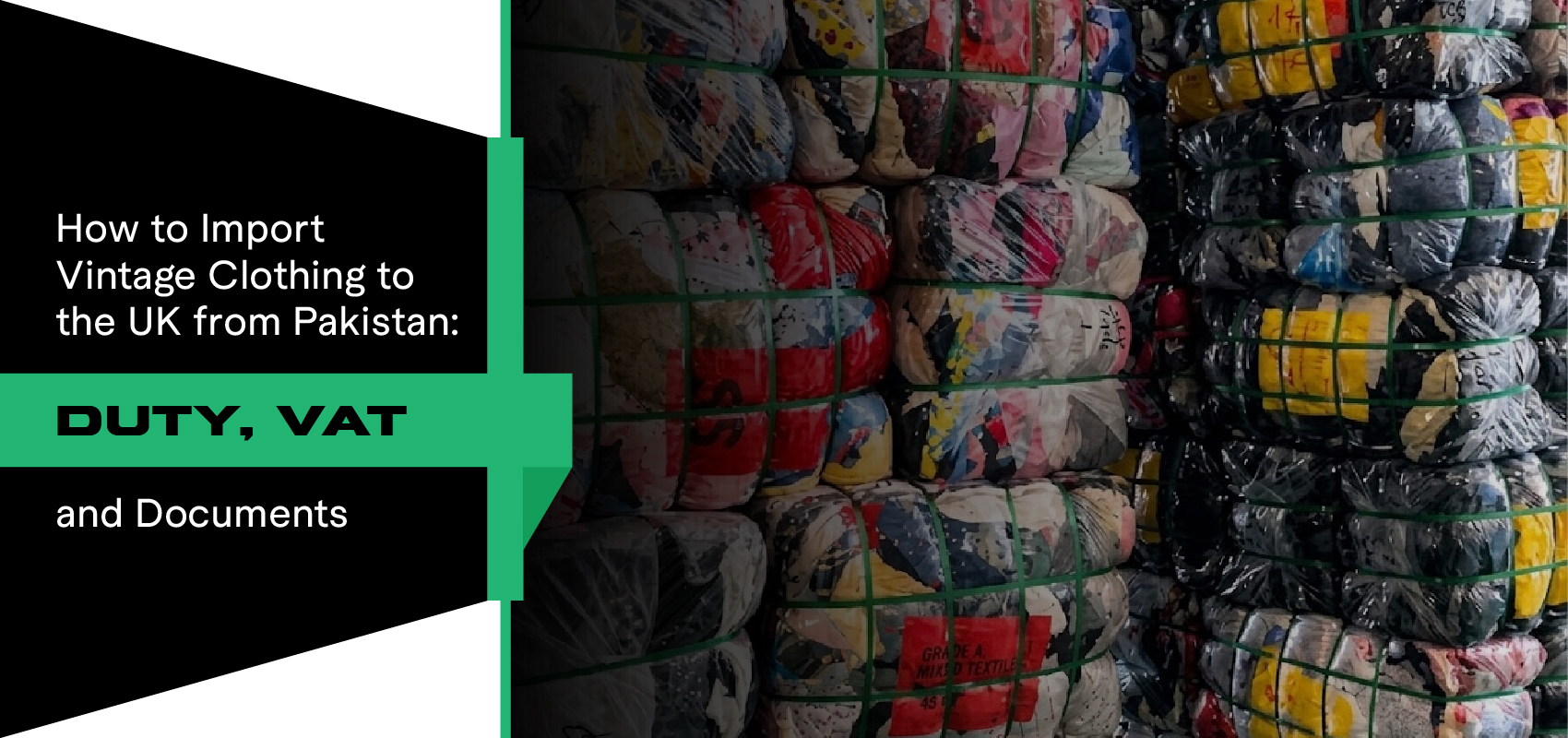
Buying wholesale vintage directly from an exporter is usually cheaper than buying through a UK middleman. The part that puts many first-time buyers off is the paperwork: customs numbers, duty, VAT and who files what.
It is more manageable than it sounds. This guide explains how to import vintage clothing to the UK from Pakistan in plain English, step by step, so you can plan costs and avoid the usual first-order surprises.
Import Vintage Clothing to the UK from Pakistan: The Short Version
Here is the process in five steps before we go through each one.
- Get a GB EORI number so you can make customs declarations.
- Confirm the commodity code for your goods.
- Work out duty and import VAT so you know your landed cost.
- Make sure your exporter provides the right documents.
- Line up a freight forwarder or customs broker before the goods ship.
Most buyers handle steps 4 and 5 through professionals. Steps 1 to 3 are the ones you should understand yourself.
Step One: Get Your EORI Number
To import goods into Great Britain as a business, you need an EORI number, which is a customs registration number. It starts with “GB” and is free to apply for through GOV.UK. You can start at the GOV.UK EORI page.
Apply early. Your forwarder or broker will ask for it before they can file your import declaration.
Step Two: Check Your Commodity Code
Every product has a commodity code, which decides how it is treated at the border. Worn clothing is normally classified under heading 6309.
There is one point worth knowing. International classification rules describe this heading as clothing showing signs of use and presented in bulk, such as bales or sacks. Customs authorities in some countries have questioned very wearable, high-grade stock under it.
That doesn’t mean you shouldn’t import vintage. It means you should agree the classification with your broker before the first shipment, not argue about it at the port. Don’t pick a code just because the duty rate looks lower.
You can search codes on the UK Trade Tariff.
Step Three: Understand Duty and Import VAT
There are two taxes to plan for.
Customs duty depends on the commodity code and where the goods come from. Rates can change and preferential rates may apply depending on origin and the scheme in force, so check the current figure on the Trade Tariff rather than relying on an old blog post, including this one.
Import VAT is charged at the UK standard rate of 20%. If you are VAT-registered, you can usually reclaim it, and postponed VAT accounting lets many businesses account for it on their VAT return instead of paying at the border. Ask your broker whether that suits you.
A simple illustration
The numbers below are an example only, not a quote.
Say your goods cost £10,000 and freight plus insurance is £1,500. The customs value is about £11,500. Duty is whatever the current rate gives you on that value. If duty were 0%, import VAT at 20% would be £2,300. If duty is above zero, VAT is charged on the value plus duty.
The point is that VAT can be a large cash-flow item even when you can reclaim it. Plan for it.
Step Four: The Documents Your Exporter Should Provide
A reliable exporter prepares a standard set. Your broker will tell you exactly what they need.
Commercial invoice. It should describe the goods specifically, for example “used vintage clothing, mixed, in bales”, with quantity, weight, value and terms of sale.
Packing list. This should match the invoice exactly. Differences between the two are a common reason for questions at customs.
Bill of lading. The shipping document that lets your forwarder collect the container. Agree early whether you want an original or an electronic release.
Certificate of origin. Useful if you want to claim a preferential duty rate, and some brokers like to have it on file regardless.
Treatment or fumigation certificate. RK Exports includes this in its standard document set. It isn’t something I’d describe as a universal legal requirement, so ask your broker whether they need it.
Who Does What
| Task | Who usually handles it |
| Sorting, baling, loading, export paperwork | Exporter |
| Sea freight booking | Exporter or your forwarder, depending on terms |
| Customs declaration, duty and VAT payment | Your customs broker or forwarder |
| Delivery to your premises | Your forwarder or haulier |
The terms of sale decide who pays for what. Under FOB, you arrange and pay for freight from the Pakistani port. Under CIF, the exporter includes freight and insurance to the UK port in the price. Always compare quotes on the same terms.
Common First-Import Mistakes
Choosing the cheapest supplier price without calculating landed cost. Freight, duty, VAT, port charges and delivery all add up.
Starting without an EORI number. It’s free, but it can delay everything if left too late.
Vague invoice descriptions. Specific wording prevents questions at the border.
Leaving broker arrangements until the ship is at sea. Contact them before you pay for the goods.
Ignoring port and storage charges. Late documents can mean daily storage fees.
Planning Your First Order
Start by choosing the product that matches your customers. Mix vintage clothing wholesale suits volume sellers, while original branded vintage clothing suits stores whose margin comes from labels. If you are still deciding, our UK vintage wholesale buying guide compares the options.
Then ask your exporter for a full quote on clear terms, get a broker quote in parallel, and add the figures together. Request pre-shipment photos, and consider a smaller first shipment to learn the process before scaling up.
This guide is general information, not customs or legal advice. Rates and rules change, so confirm current requirements on GOV.UK or with a licensed broker.
FAQs
Do I need an EORI number to import vintage clothing into the UK?
Yes, if you are importing goods into Great Britain as a business, you need a GB EORI number to make customs declarations. It is free to apply for on GOV.UK. Apply before your goods ship so your broker can prepare the import entry.
What commodity code applies to vintage clothing?
Worn clothing is normally classified under heading 6309. Because classification rules refer to worn goods presented in bulk, you should confirm the exact code with your broker before the first shipment and check the current duty rate on the UK Trade Tariff.
Can I reclaim import VAT on vintage clothing?
If you are VAT-registered, you can usually reclaim import VAT through your VAT return, and many importers use postponed VAT accounting to avoid paying it upfront. Ask your accountant or broker which approach suits your business.
Do I need a customs broker?
It isn’t a legal requirement, but most first-time importers use one, often through their freight forwarder. They file the declaration, calculate duty and VAT, and deal with the port, which saves time and avoids costly mistakes.
What should I check before my first order?
Check your EORI number, the commodity code, a full landed-cost estimate, the document list your exporter will provide, and your broker arrangements. Request pre-shipment photos and consider a smaller first order to test quality and process.
Conclusion
Learning how to import vintage clothing to the UK from Pakistan comes down to a few clear steps: register for an EORI number, confirm the commodity code, understand duty and import VAT, and line up the right documents and professionals before the container ships. Buyers who calculate landed cost up front, rather than just the supplier’s price, make better decisions and run smoother imports. The first order takes the most effort. After that, the process is largely routine.